Continuous gait monitoring is important in Parkinson’s Disease (PD) as gait deteriorates with disease progression and responses to treatment vary over time. Wearable sensor systems offer a practical alternative to laboratory-based gait assessment for real-world monitoring. This study aimed to (1) validate spatiotemporal gait parameters derived from the NUSHU smart shoe system against the Vicon motion capture system in healthy older adults and individuals with PD, and (2) assess whether measurement agreement was maintained during active vibrotactile feedback delivery. Thirty-two participants (17 with mild to moderate PD and 15 age- and gender-matched healthy older adults; mean age 67 ± 7.4 years) completed overground walking trials under no vibration, stance phase vibration, and swing phase vibration conditions. A total of 4790 strides were analysed using linear mixed effects models. Overall agreement was good for stride length (ICC = 0.894, CCC = 0.926), stride time (ICC = 0.853, CCC = 0.954), and velocity (ICC = 0.885, CCC = 0.940), with moderate agreement for double support time (ICC = 0.752, CCC = 0.477). Agreement remained consistent across vibration conditions in both groups.
Whitepaper
Vibrotactile Feedback for Gait Rehabilitation
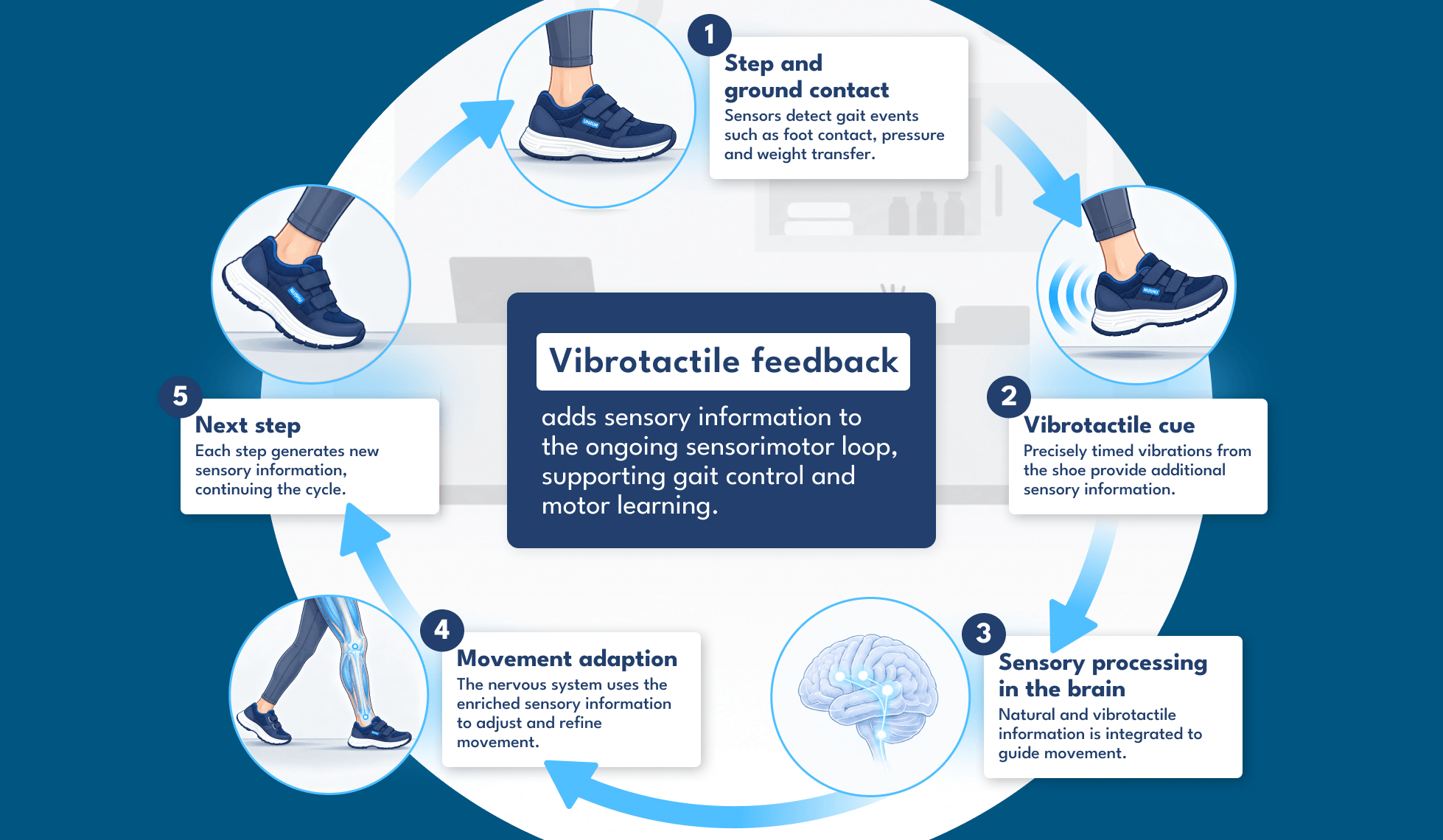
Walking impairments are a major cause of reduced mobility, falls, and loss of independence in individuals with neurological disorders and age-related mobility decline. As the demand for effective rehabilitation continues to grow, there is increasing interest in technologies that can support gait training beyond the clinical setting.
Wearable vibrotactile feedback is one such approach. By delivering precisely timed tactile cues during walking, these systems augment the sensory information available to the nervous system, supporting gait control and motor learning rather than replacing natural movement. A growing body of research demonstrates that vibration can influence proprioception, enhance sensorimotor processing, and improve clinically relevant aspects of gait.
This paper reviews the scientific principles underlying wearable vibrotactile feedback, summarizes the current clinical evidence, and discusses how these findings support the development of wearable rehabilitation technologies for improving gait and functional mobility.
Whitepaper
Walking: How the Nervous System Shapes Every Step
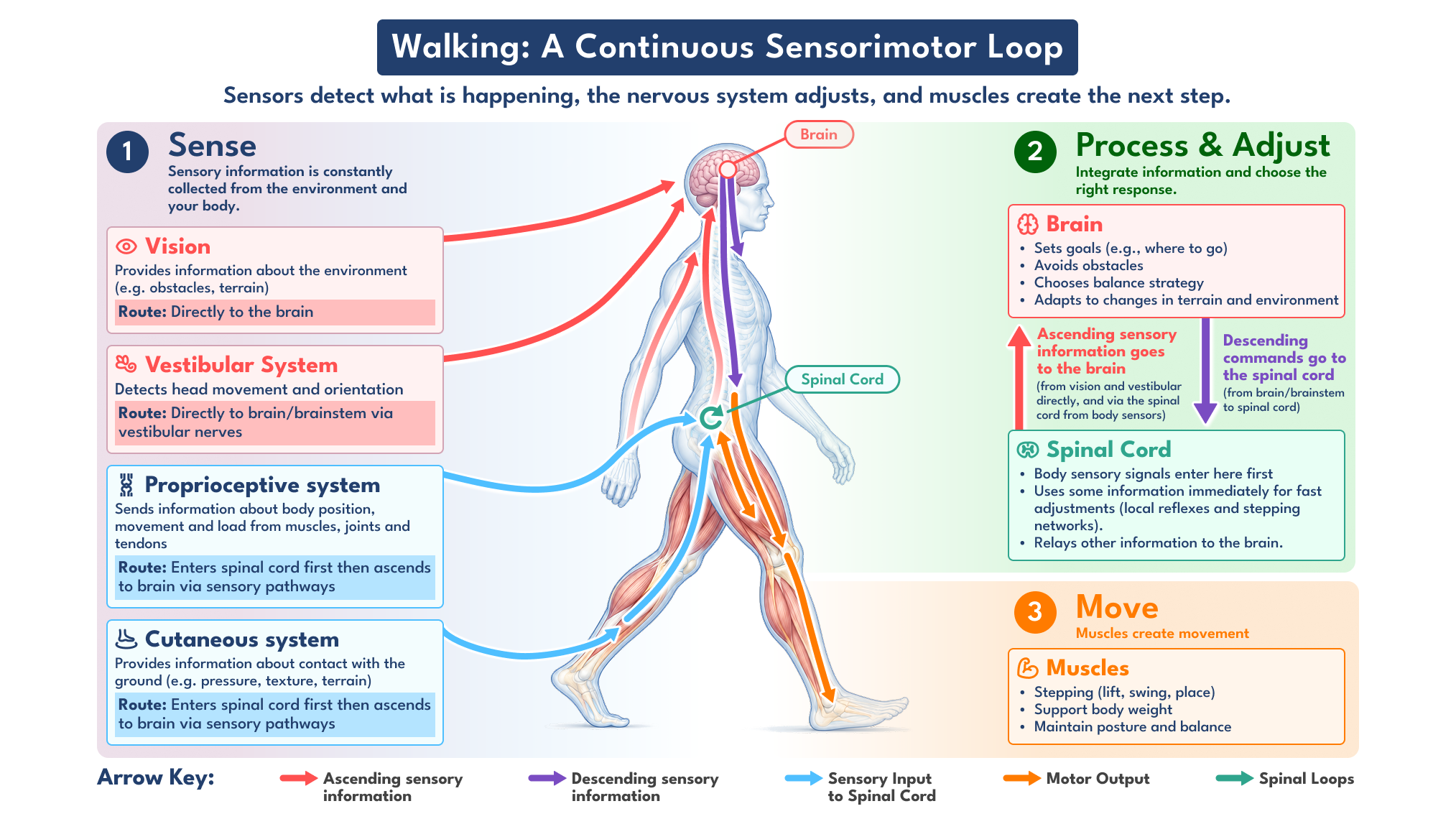
Walking is a fundamental part of everyday life, playing an important role in mobility and independence. Although it often feels automatic, each step requires constant coordination between the nervous system, sensory systems and muscles.
Movement relies on an ongoing sensorimotor loop: the nervous system coordinates movement while receiving continuous sensory feedback from the body and environment to help guide and adapt each step. Changes in gait may result when this communication is affected by neurological injury or disease.
Objective gait measurement can describe characteristics such as walking speed, step length, timing, symmetry and variability. Considering multiple gait parameters and how they change over time can provide a more detailed picture of how a person moves.
Whitepaper
From Perception to Movement
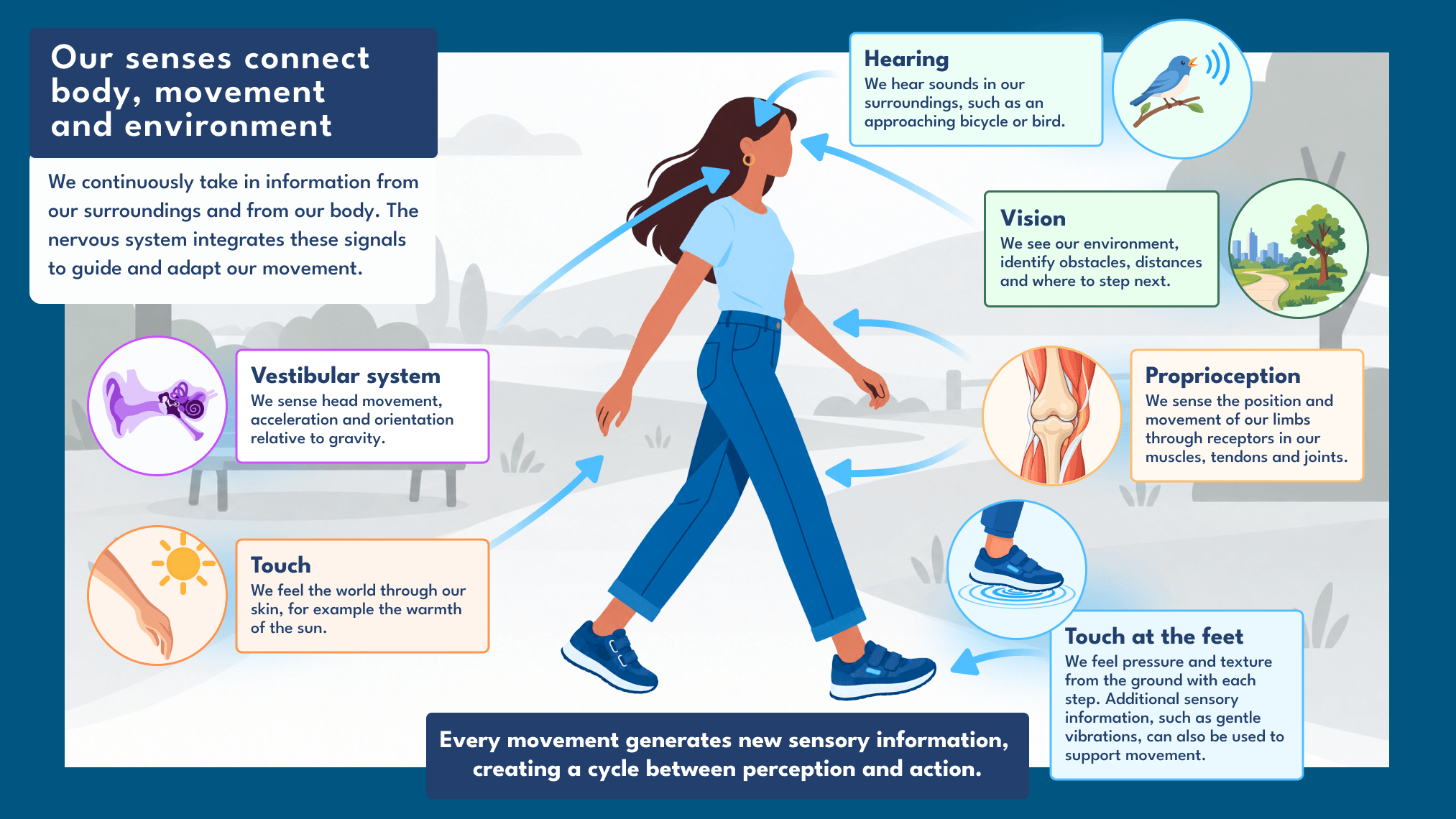
Humans use sensory information continuously to perceive their surroundings, understand the position and movement of their body, and adapt to a changing environment. While sight, hearing, smell, taste, and touch are familiar to most of us, less familiar senses also play an important role in how we move.
Walking is a remarkable example of sensory information working together. Vision provides information about the environment, proprioception about the position and movement of the body, and the vestibular system about movement and orientation. The nervous system continuously integrates this information to guide and adapt movement. Understanding this interaction also introduces the concept of sensory augmentation, in which additional sensory information, such as vibrotactile feedback, can become part of this ongoing exchange.
Whitepaper
What Gait Can Tell Us About Fall Risk
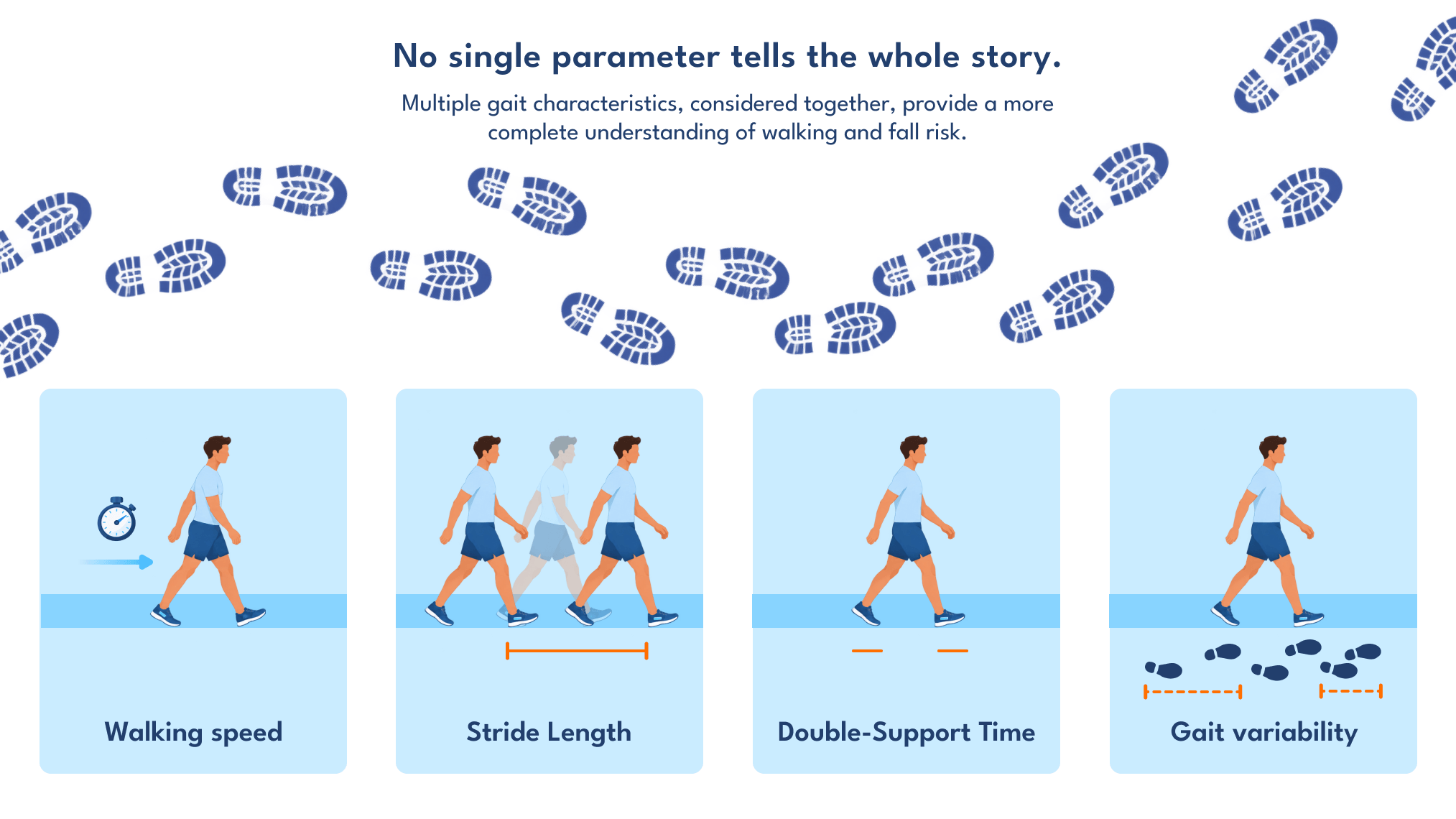
Falls are complex events influenced by many interacting factors. Since walking requires coordination of balance, sensory information, muscle function, attention, and movement, changes in gait can provide measurable data about how a person walks. Research has identified several gait characteristics associated with an increased risk of falling, including slower walking speed, shorter steps and strides, longer double-support time, and greater gait variability.
However, no single gait parameter can determine whether someone will fall. Instead, gait measurements provide different pieces of information about walking performance. Considering multiple gait characteristics, documenting how they change over time, and measuring gait during standardized assessments and everyday walking provides a broader picture of how a person moves.
Scafa S, de Seta V, Wang R, Sanchez Lopez P, Sanchez Lopez A, Varescon C, et al. Nat Med 2026;32(8):2815-2830. An adaptive deep brain stimulation strategy that adjusts to activity and improves gait in Parkinson's disease. NUSHU was used to capture gait in this study.
Lopez PS, Wang R, Varescon C, Schaer A, Ergeneman O, Chatzipirpiridis G, et al. 2025 47th Annual International Conference of the IEEE Engineering in Medicine and Biology Society (EMBC):1-5. A wearable platform that maps motor and neural biomarkers of gait dysfunction in people with Parkinson's disease across daily life.
Wu J, Becsek B, Schaer A, Maurenbrecher H, Chatzipirpiridis G, Ergeneman O, et al. IEEE J Biomed Health Inform 2023;27(3):1295-1306. Gait phase detection that runs in real time on the wearable itself, validated on free-living gait outside the laboratory.
Begutachtete Forschung
Publikationen
Die Technologie von NUSHU basiert auf rigoroser wissenschaftlicher Forschung und klinischer Validierung. Wir arbeiten mit führenden Forschungseinrichtungen und medizinischen Fachkräften weltweit zusammen, um das Verständnis menschlicher Bewegung zu erweitern und die Mobilitätsergebnisse zu verbessern.
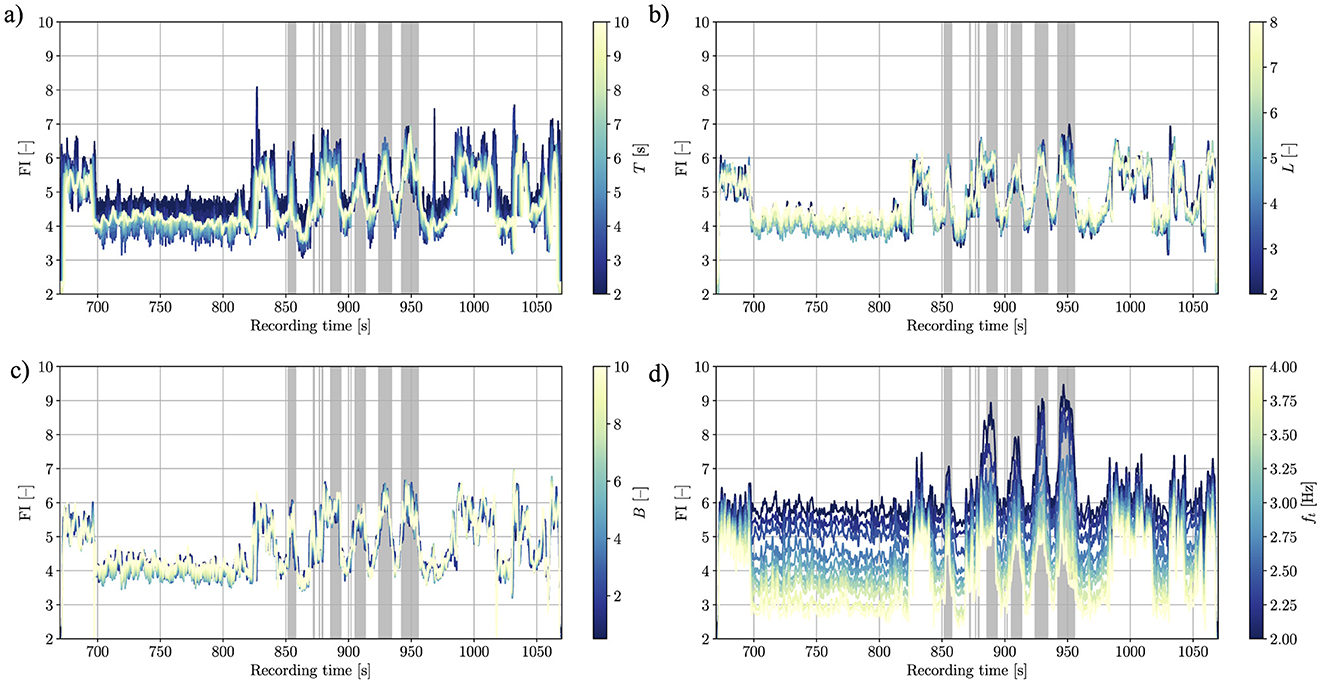
Automatische Methoden zur Erkennung von FOG unter Verwendung des Freeze-Index (FI) wurden vielfach vorgeschlagen, um FOG systematisch im realen Leben zu überwachen und Therapieoptimierungen zu steuern. Die Methoden zur Schätzung des FI stützten sich jedoch auf ein breites Spektrum von Messtechnologien und Berechnungsmethoden, denen es oft an mathematischer Strenge mangelte. Dieser Mangel an Standardisierung hat die Akzeptanz des FI durch Zulassungsbehörden als reproduzierbares, robustes, wirksames und sicheres Maß, auf dem weitere Entwicklungen basieren können, erheblich behindert. In dieser Studie formalisieren wir die Definition des FI und schlagen einen rigorosen, expliziten Schätzalgorithmus vor, der als Standard für zukünftige Anwendungen dienen kann. Diese Standardisierung bietet einen konsistenten und zuverlässigen Maßstab.
Die Verschlechterung des Gangs kann als Biomarker für Alterung und neurologische Erkrankungen verwendet werden.
Kontinuierliche Gangüberwachung und -analyse sind für die Früherkennung von Defiziten und personalisierte Reha-
bilitation unerlässlich. Der Einsatz mobiler und tragbarer Trägheitssensorsysteme zur Gangüberwachung und -analyse wurde
in der Literatur umfassend untersucht und zeigte vielversprechende Ergebnisse. In dieser Arbeit haben wir ein
auf Trägheitssensoren basierendes In-Schuh-Ganganalysesystem für die Echtzeit-Gangüberwachung entwickelt und die
optimale Abtastfrequenz untersucht, um alle Informationen über Gangmuster zu erfassen. Eine explorative Validie-
rungsstudie wurde unter Verwendung eines optischen Motion-Capture-Systems an vier gesunden erwachsenen Probanden durchgeführt.
Motion-Capture-Systeme werden weithin als Goldstandard für die Ganganalyse akzeptiert und zur Validierung anderer Ganganalysesysteme verwendet. Bis heute wurden ihre Zuverlässigkeit und Einschränkungen bei der manuellen Kennzeichnung von Gangereignissen nicht untersucht.
Zielsetzungen: Bewertung der Unsicherheit bei der manuellen Kennzeichnung und Einführung eines hybriden Modells zur Schritterkennung und Gangereignisschätzung für autonome, langfristige und Fernüberwachung.
Methoden: Schätzung der Inkonsistenzen zwischen Kennzeichnern durch Berechnung der Übereinstimmungsgrenzen. Entwicklung eines hybriden Modells basierend auf Dynamic Time Warping und Convolutional Neural Network zur Identifizierung gültiger Schritte und Eliminierung von Nicht-Schritt-Daten in Trägheitsdaten (Gehen), die von einem tragbaren Gerät erfasst wurden. Abschließend Erkennung von Gangereignissen innerhalb eines gültigen Schrittbereichs.
Whitepaper
Wir werden in Kürze eine Sammlung unserer Whitepaper hinzufügen.
0 Ergebnisse
Keine passenden Ergebnisse
Versuchen Sie einen anderen Begriff oder setzen Sie die Filter zurück.