Continuous gait monitoring is important in Parkinson’s Disease (PD) as gait deteriorates with disease progression and responses to treatment vary over time. Wearable sensor systems offer a practical alternative to laboratory-based gait assessment for real-world monitoring. This study aimed to (1) validate spatiotemporal gait parameters derived from the NUSHU smart shoe system against the Vicon motion capture system in healthy older adults and individuals with PD, and (2) assess whether measurement agreement was maintained during active vibrotactile feedback delivery. Thirty-two participants (17 with mild to moderate PD and 15 age- and gender-matched healthy older adults; mean age 67 ± 7.4 years) completed overground walking trials under no vibration, stance phase vibration, and swing phase vibration conditions. A total of 4790 strides were analysed using linear mixed effects models. Overall agreement was good for stride length (ICC = 0.894, CCC = 0.926), stride time (ICC = 0.853, CCC = 0.954), and velocity (ICC = 0.885, CCC = 0.940), with moderate agreement for double support time (ICC = 0.752, CCC = 0.477). Agreement remained consistent across vibration conditions in both groups.
Fagrapporter
Vibrotactile Feedback for Gait Rehabilitation
Walking impairments are a major cause of reduced mobility, falls, and loss of independence in individuals with neurological disorders and age-related mobility decline. As the demand for effective rehabilitation continues to grow, there is increasing interest in technologies that can support gait training beyond the clinical setting.
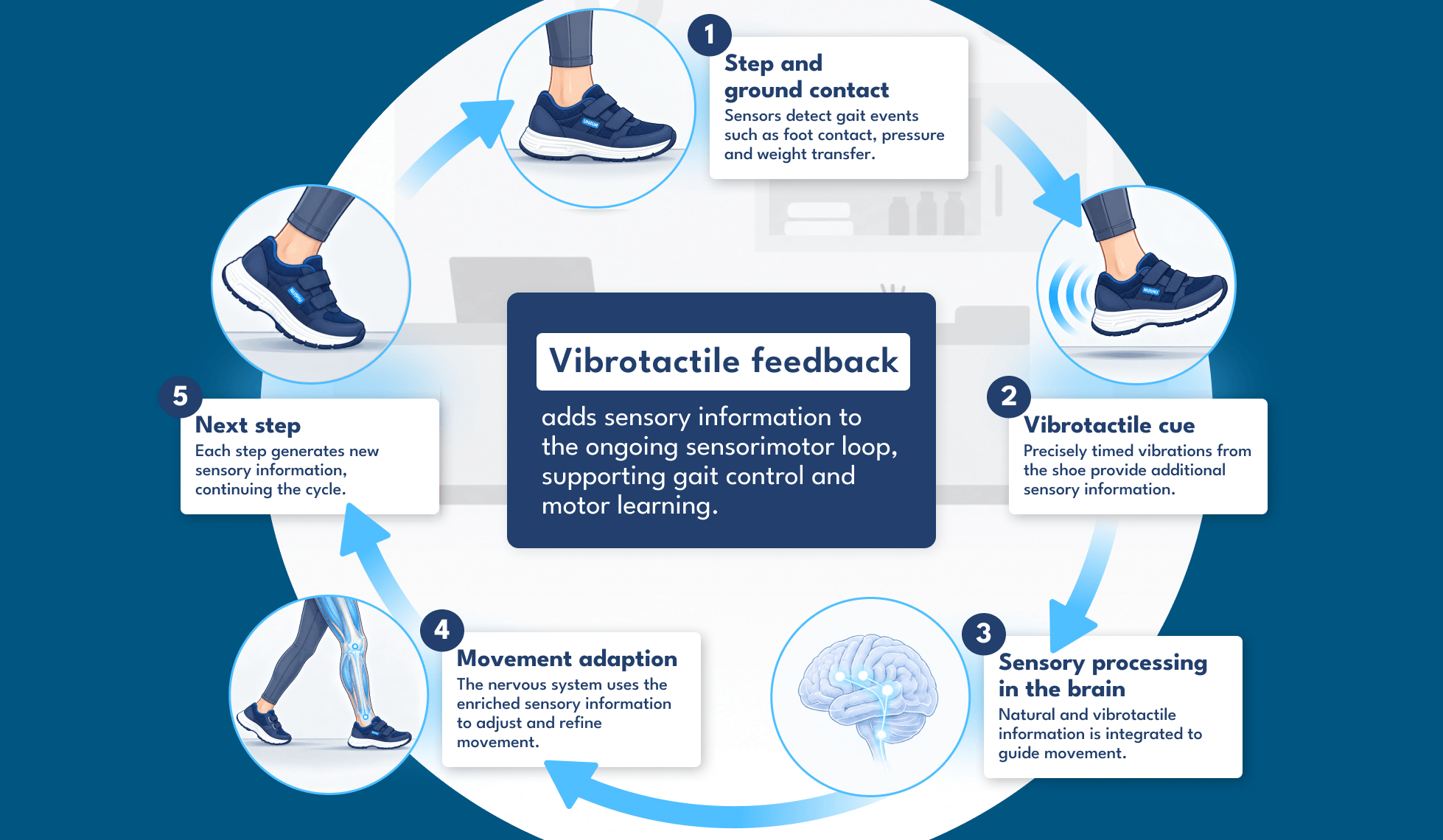
Wearable vibrotactile feedback is one such approach. By delivering precisely timed tactile cues during walking, these systems augment the sensory information available to the nervous system, supporting gait control and motor learning rather than replacing natural movement. A growing body of research demonstrates that vibration can influence proprioception, enhance sensorimotor processing, and improve clinically relevant aspects of gait.
This paper reviews the scientific principles underlying wearable vibrotactile feedback, summarizes the current clinical evidence, and discusses how these findings support the development of wearable rehabilitation technologies for improving gait and functional mobility.
Fagrapporter
Walking: How the Nervous System Shapes Every Step
Walking is a fundamental part of everyday life, playing an important role in mobility and independence. Although it often feels automatic, each step requires constant coordination between the nervous system, sensory systems and muscles.
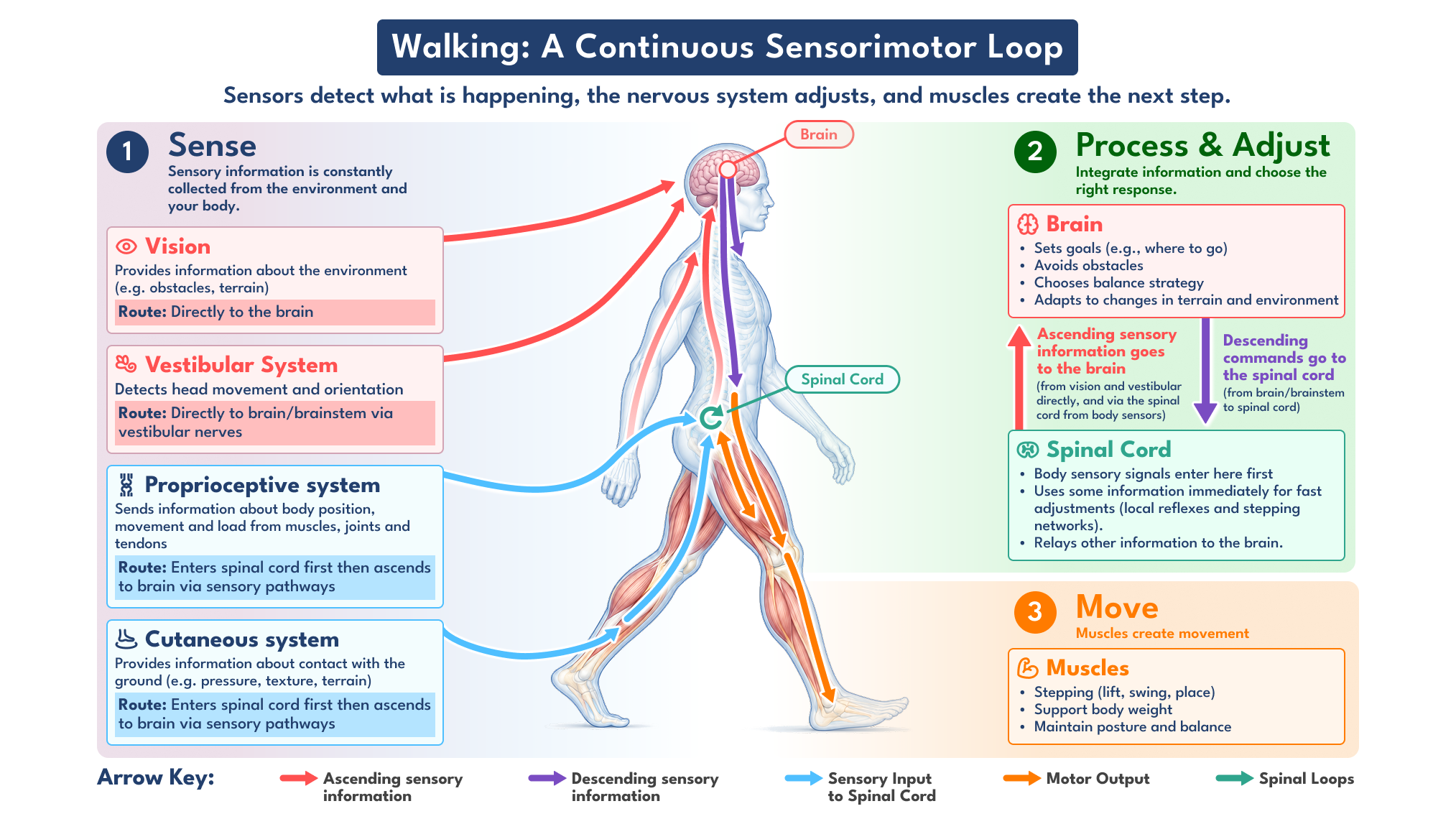
Movement relies on an ongoing sensorimotor loop: the nervous system coordinates movement while receiving continuous sensory feedback from the body and environment to help guide and adapt each step. Changes in gait may result when this communication is affected by neurological injury or disease.
Objective gait measurement can describe characteristics such as walking speed, step length, timing, symmetry and variability. Considering multiple gait parameters and how they change over time can provide a more detailed picture of how a person moves.
Fagrapporter
From Perception to Movement
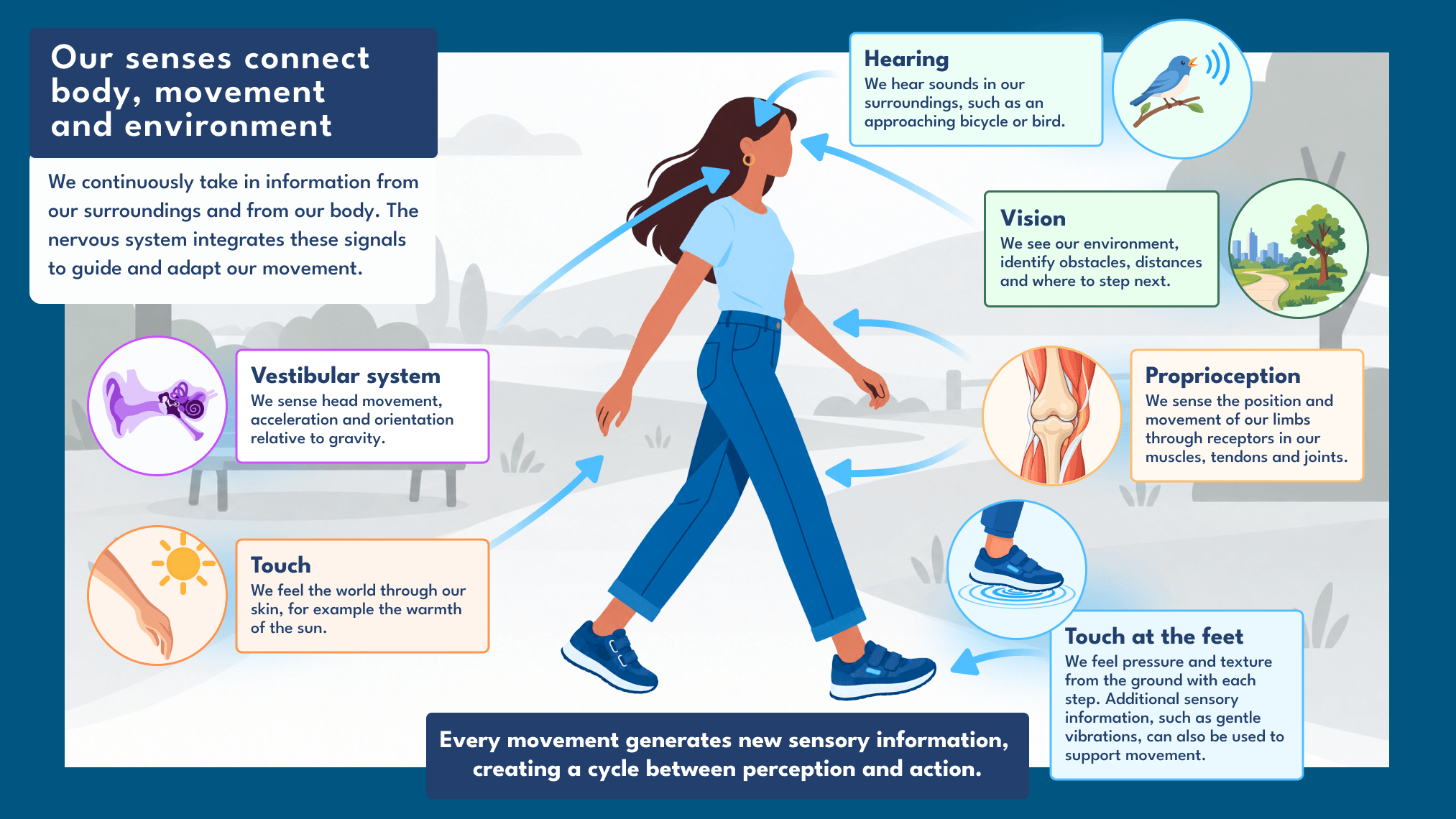
Humans use sensory information continuously to perceive their surroundings, understand the position and movement of their body, and adapt to a changing environment. While sight, hearing, smell, taste, and touch are familiar to most of us, less familiar senses also play an important role in how we move.
Walking is a remarkable example of sensory information working together. Vision provides information about the environment, proprioception about the position and movement of the body, and the vestibular system about movement and orientation. The nervous system continuously integrates this information to guide and adapt movement. Understanding this interaction also introduces the concept of sensory augmentation, in which additional sensory information, such as vibrotactile feedback, can become part of this ongoing exchange.
Fagrapporter
What Gait Can Tell Us About Fall Risk
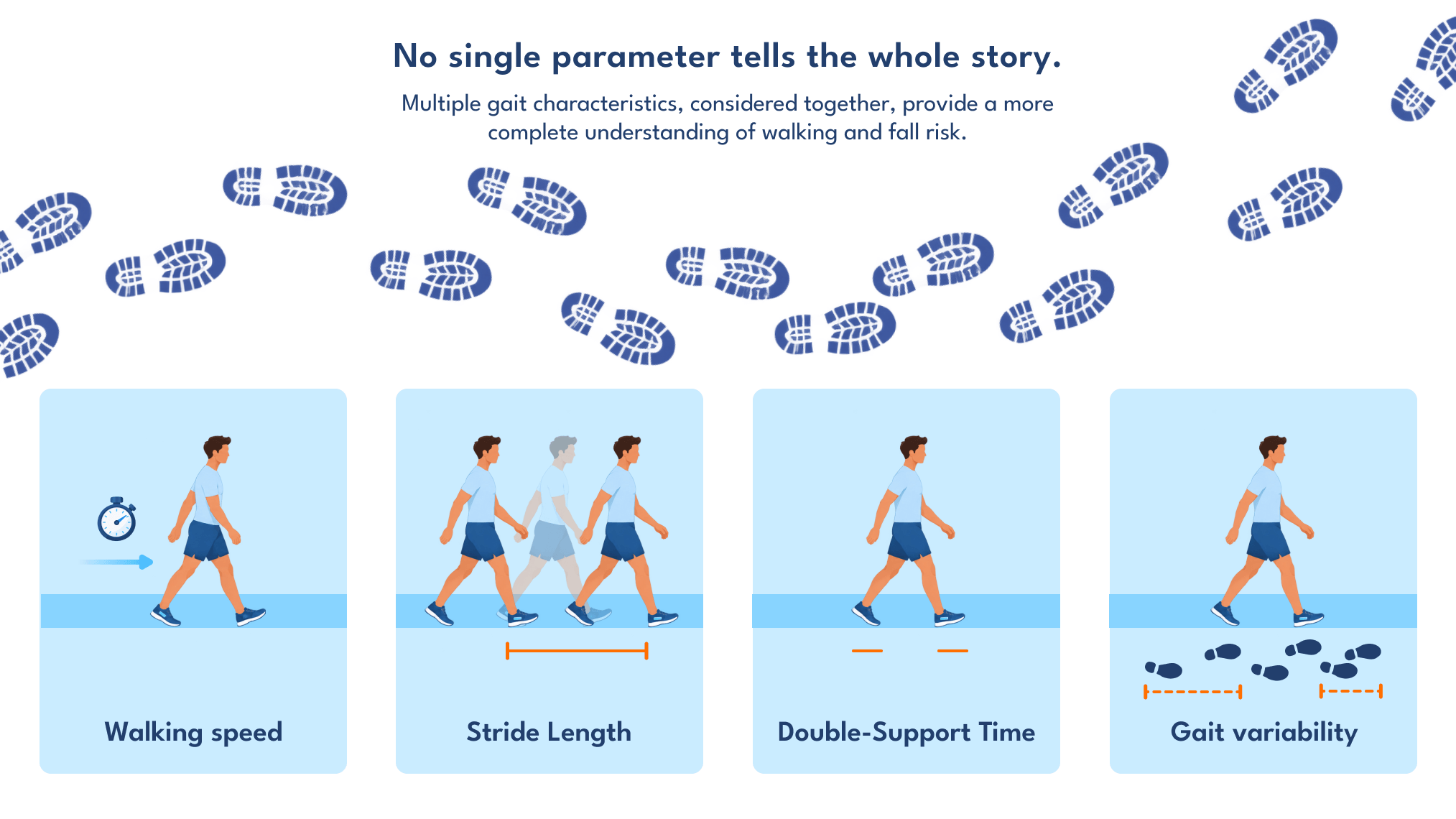
Falls are complex events influenced by many interacting factors. Since walking requires coordination of balance, sensory information, muscle function, attention, and movement, changes in gait can provide measurable data about how a person walks. Research has identified several gait characteristics associated with an increased risk of falling, including slower walking speed, shorter steps and strides, longer double-support time, and greater gait variability.
However, no single gait parameter can determine whether someone will fall. Instead, gait measurements provide different pieces of information about walking performance. Considering multiple gait characteristics, documenting how they change over time, and measuring gait during standardized assessments and everyday walking provides a broader picture of how a person moves.
Scafa S, de Seta V, Wang R, Sanchez Lopez P, Sanchez Lopez A, Varescon C, et al. Nat Med 2026;32(8):2815-2830. An adaptive deep brain stimulation strategy that adjusts to activity and improves gait in Parkinson's disease. NUSHU was used to capture gait in this study.
Lopez PS, Wang R, Varescon C, Schaer A, Ergeneman O, Chatzipirpiridis G, et al. 2025 47th Annual International Conference of the IEEE Engineering in Medicine and Biology Society (EMBC):1-5. A wearable platform that maps motor and neural biomarkers of gait dysfunction in people with Parkinson's disease across daily life.
Wu J, Becsek B, Schaer A, Maurenbrecher H, Chatzipirpiridis G, Ergeneman O, et al. IEEE J Biomed Health Inform 2023;27(3):1295-1306. Gait phase detection that runs in real time on the wearable itself, validated on free-living gait outside the laboratory.
Fagfellevurdert forskning
Publikasjoner
NUSHUs teknologi er bygget på grundig vitenskapelig forskning og klinisk validering. Vi samarbeider med ledende forskningsinstitusjoner og helsepersonell over hele verden for å fremme forståelsen av menneskelig bevegelse og forbedre mobilitetsresultater.
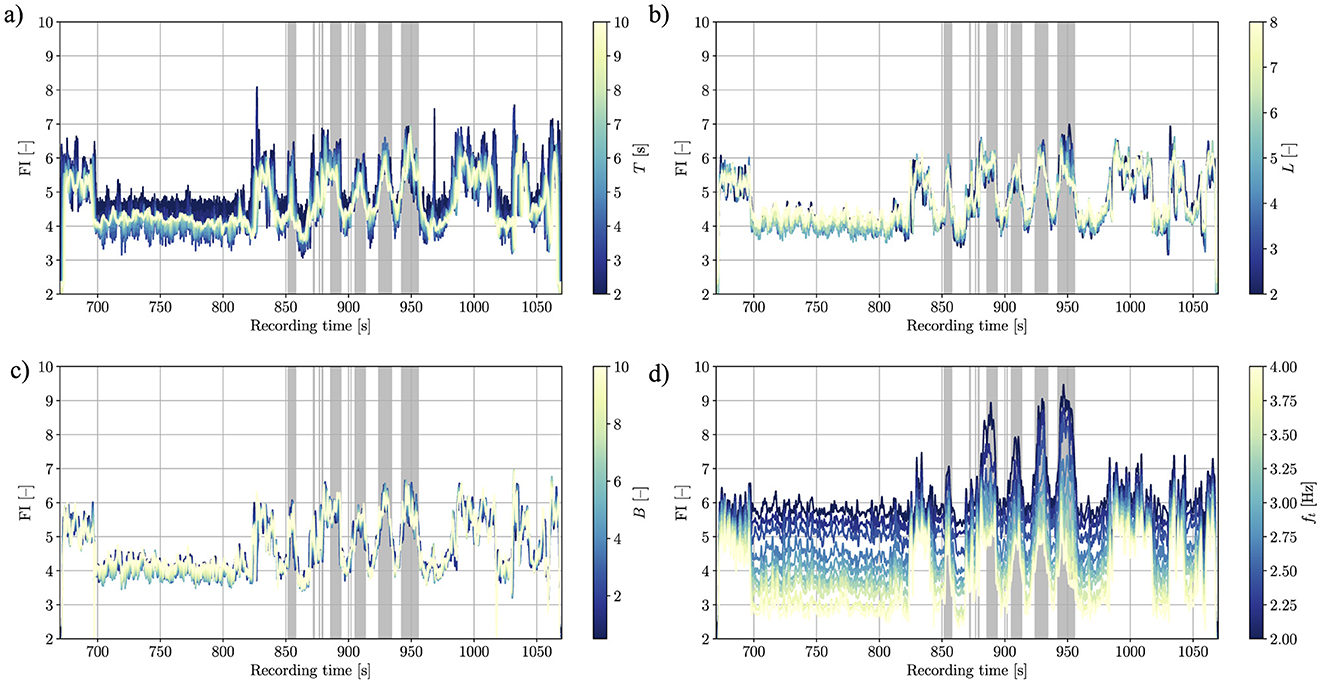
Automatiske metoder for å oppdage gangfrysing (FOG) ved bruk av fryseindeksen (FI) har blitt foreslått i stor utstrekning for å systematisk overvåke FOG i dagliglivet og veilede terapioptimaliseringer. Metoder for å estimere FI har imidlertid vært avhengige av et bredt spekter av måleteknologier og beregningsmetoder, og har ofte manglet matematisk strenghet. Denne mangelen på standardisering har i alvorlig grad hindret regulatoriske myndigheters aksept av FI som et reproduserbart, robust, effektivt og trygt mål å basere videre utvikling på. I denne studien formaliserer vi definisjonen av FI og foreslår en streng, eksplisitt estimeringsalgoritme som kan fungere som en standard for fremtidige applikasjoner. Denne standardiseringen gir en konsistent og pålitelig referanse.
Svekkelse av gangfunksjon kan brukes som en biomarkør for aldring og nevrologiske sykdommer.
Kontinuerlig gangovervåking og analyse er avgjørende for tidlig påvisning av mangler og personlig tilpasset reha‐
bilitering. Bruken av mobile og bærbare treghetssensorsystemer for gangovervåking og analyse har
blitt godt utforsket med lovende resultater i litteraturen. I dette arbeidet utviklet vi et
treghetssensorbasert in-shoe-system for ganganalyse for sanntidsovervåking av gange, og undersøkte den
optimale samplingsfrekvensen for å fange opp all informasjon om gangmønstre. En eksplorativ valide‐
ringsstudie ble utført ved bruk av et optisk bevegelsesfangstsystem på fire friske voksne forsøkspersoner.
Bevegelsesfangstsystemer er allment akseptert som gullstandard for ganganalyse og brukes til validering av andre ganganalysesystemer. Til dags dato har deres pålitelighet og begrensninger ved manuell merking av ganghendelser ikke blitt studert.
Mål: Evaluere usikkerhet ved manuell merking og introdusere en hybridmodell for gjenkjenning av skritt og estimering av ganghendelser for autonom, langsiktig og ekstern overvåking.
Metoder: Estimere inkonsistens mellom merkerne ved å beregne samsvarsgrenser (limits-of-agreement). Utvikle en hybridmodell basert på dynamisk tidsforvrengning (dynamic time warping) og konvolusjonelle nevrale nettverk for å identifisere gyldige skritt og eliminere data som ikke er skritt i treghetsdata (gange) samlet inn av en bærbar enhet. Til slutt, detektere ganghendelser innenfor et gyldig skrittområde.
Hvitbøker
Vi vil snart legge til en samling av våre hvitbøker.