Continuous gait monitoring is important in Parkinson’s Disease (PD) as gait deteriorates with disease progression and responses to treatment vary over time. Wearable sensor systems offer a practical alternative to laboratory-based gait assessment for real-world monitoring. This study aimed to (1) validate spatiotemporal gait parameters derived from the NUSHU smart shoe system against the Vicon motion capture system in healthy older adults and individuals with PD, and (2) assess whether measurement agreement was maintained during active vibrotactile feedback delivery. Thirty-two participants (17 with mild to moderate PD and 15 age- and gender-matched healthy older adults; mean age 67 ± 7.4 years) completed overground walking trials under no vibration, stance phase vibration, and swing phase vibration conditions. A total of 4790 strides were analysed using linear mixed effects models. Overall agreement was good for stride length (ICC = 0.894, CCC = 0.926), stride time (ICC = 0.853, CCC = 0.954), and velocity (ICC = 0.885, CCC = 0.940), with moderate agreement for double support time (ICC = 0.752, CCC = 0.477). Agreement remained consistent across vibration conditions in both groups.
White paper
Vibrotactile Feedback for Gait Rehabilitation
Walking impairments are a major cause of reduced mobility, falls, and loss of independence in individuals with neurological disorders and age-related mobility decline. As the demand for effective rehabilitation continues to grow, there is increasing interest in technologies that can support gait training beyond the clinical setting.
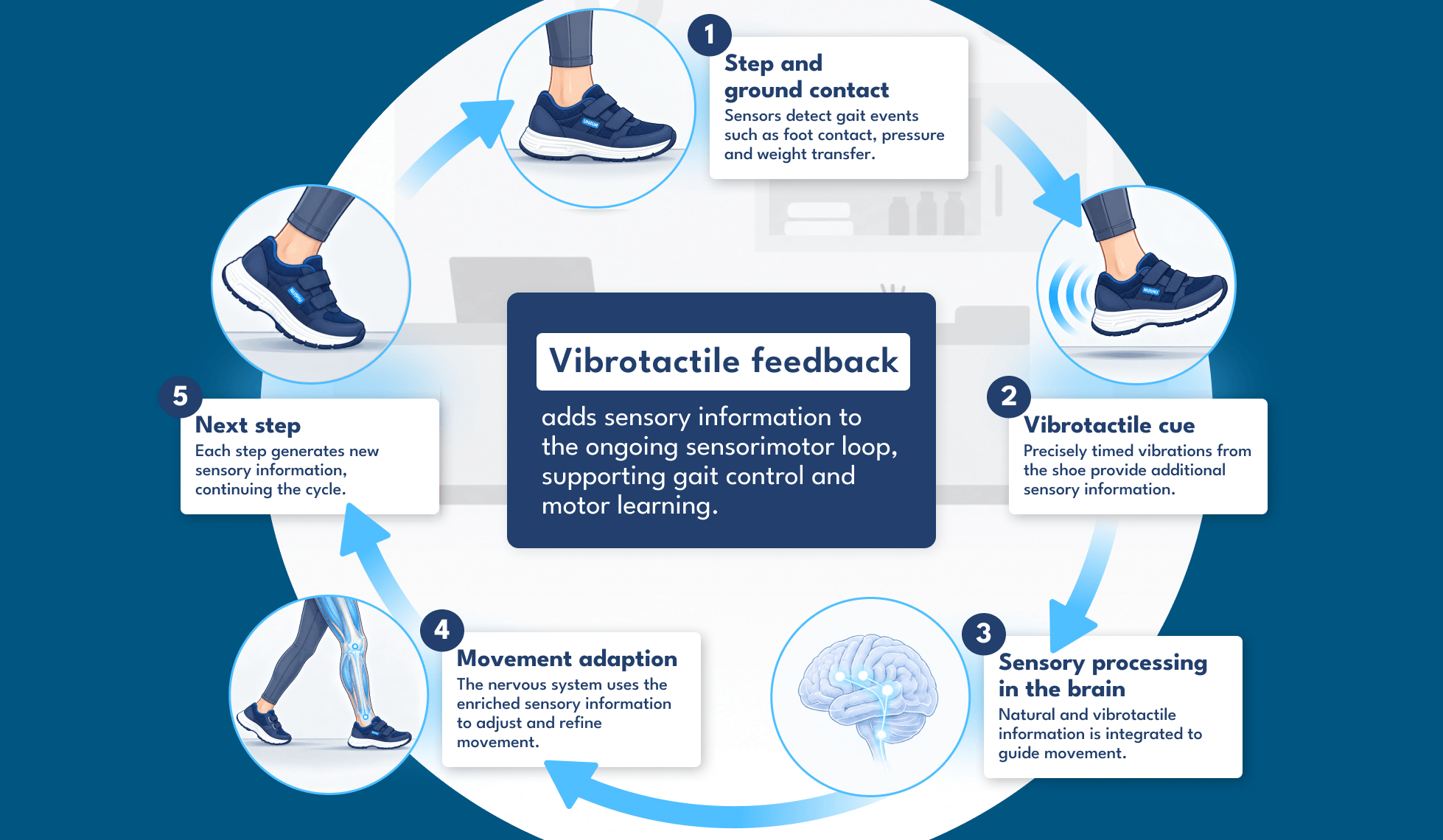
Wearable vibrotactile feedback is one such approach. By delivering precisely timed tactile cues during walking, these systems augment the sensory information available to the nervous system, supporting gait control and motor learning rather than replacing natural movement. A growing body of research demonstrates that vibration can influence proprioception, enhance sensorimotor processing, and improve clinically relevant aspects of gait.
This paper reviews the scientific principles underlying wearable vibrotactile feedback, summarizes the current clinical evidence, and discusses how these findings support the development of wearable rehabilitation technologies for improving gait and functional mobility.
White paper
Walking: How the Nervous System Shapes Every Step
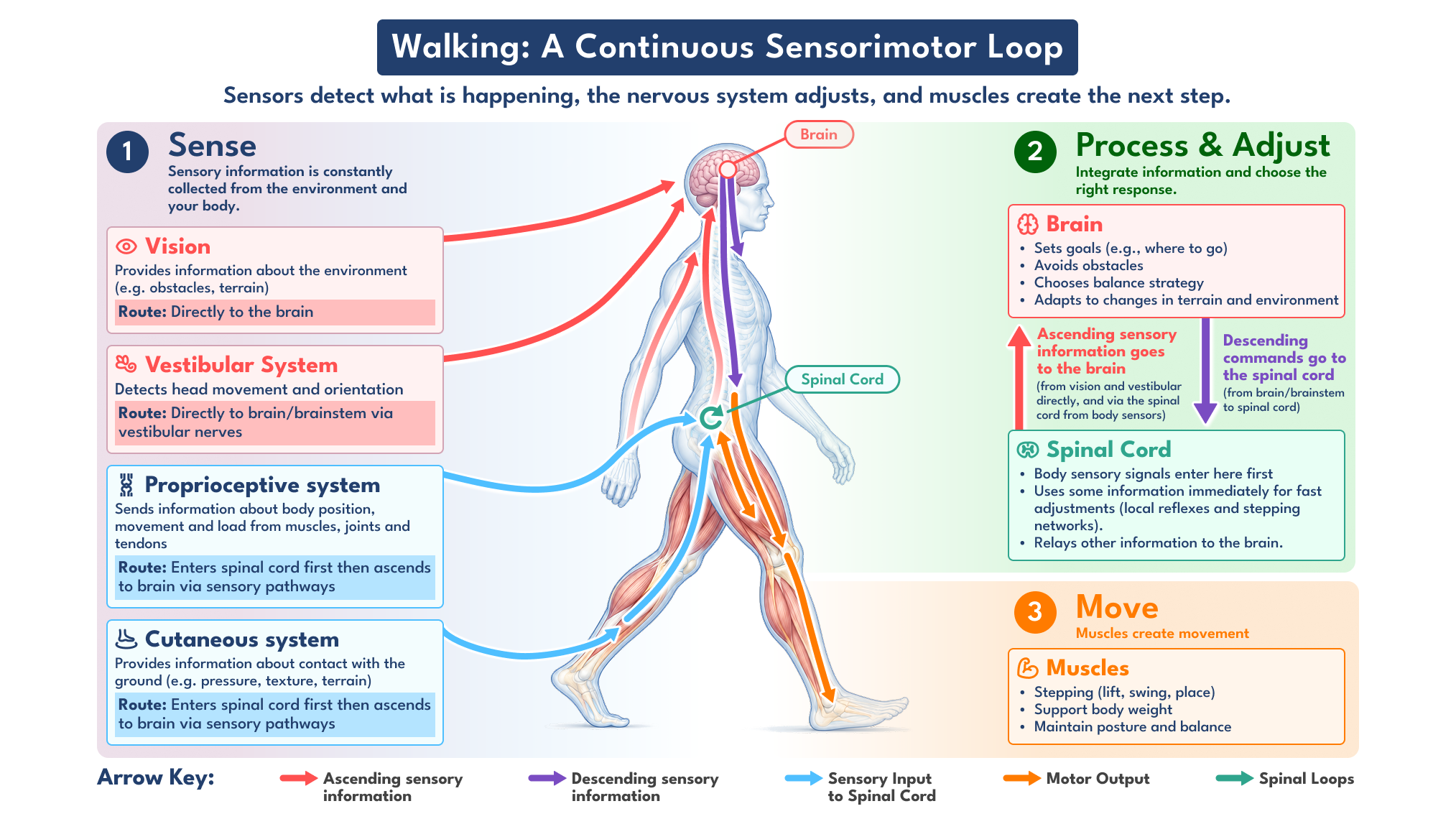
Walking is a fundamental part of everyday life, playing an important role in mobility and independence. Although it often feels automatic, each step requires constant coordination between the nervous system, sensory systems and muscles.
Movement relies on an ongoing sensorimotor loop: the nervous system coordinates movement while receiving continuous sensory feedback from the body and environment to help guide and adapt each step. Changes in gait may result when this communication is affected by neurological injury or disease.
Objective gait measurement can describe characteristics such as walking speed, step length, timing, symmetry and variability. Considering multiple gait parameters and how they change over time can provide a more detailed picture of how a person moves.
White paper
From Perception to Movement
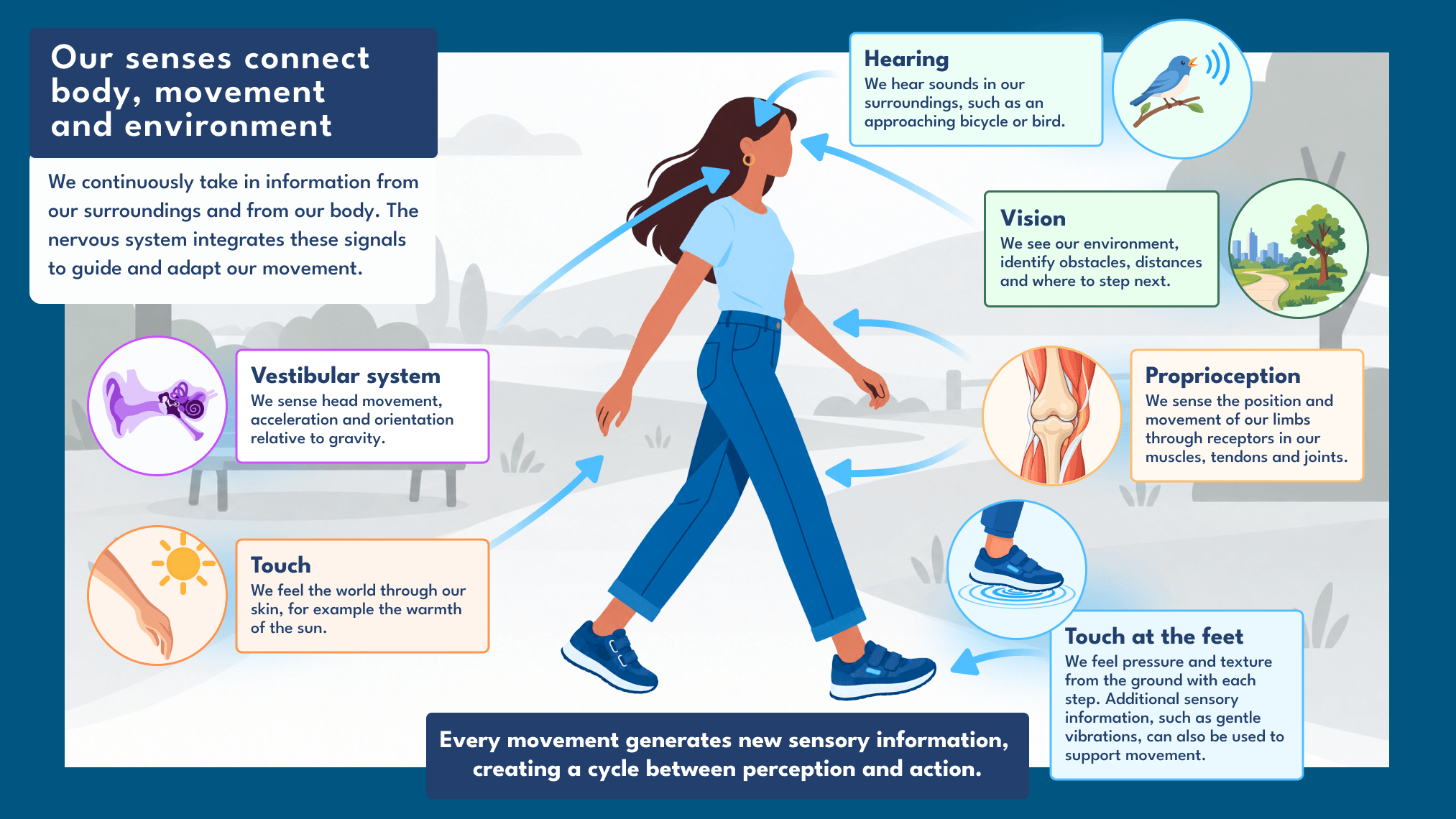
Humans use sensory information continuously to perceive their surroundings, understand the position and movement of their body, and adapt to a changing environment. While sight, hearing, smell, taste, and touch are familiar to most of us, less familiar senses also play an important role in how we move.
Walking is a remarkable example of sensory information working together. Vision provides information about the environment, proprioception about the position and movement of the body, and the vestibular system about movement and orientation. The nervous system continuously integrates this information to guide and adapt movement. Understanding this interaction also introduces the concept of sensory augmentation, in which additional sensory information, such as vibrotactile feedback, can become part of this ongoing exchange.
White paper
What Gait Can Tell Us About Fall Risk
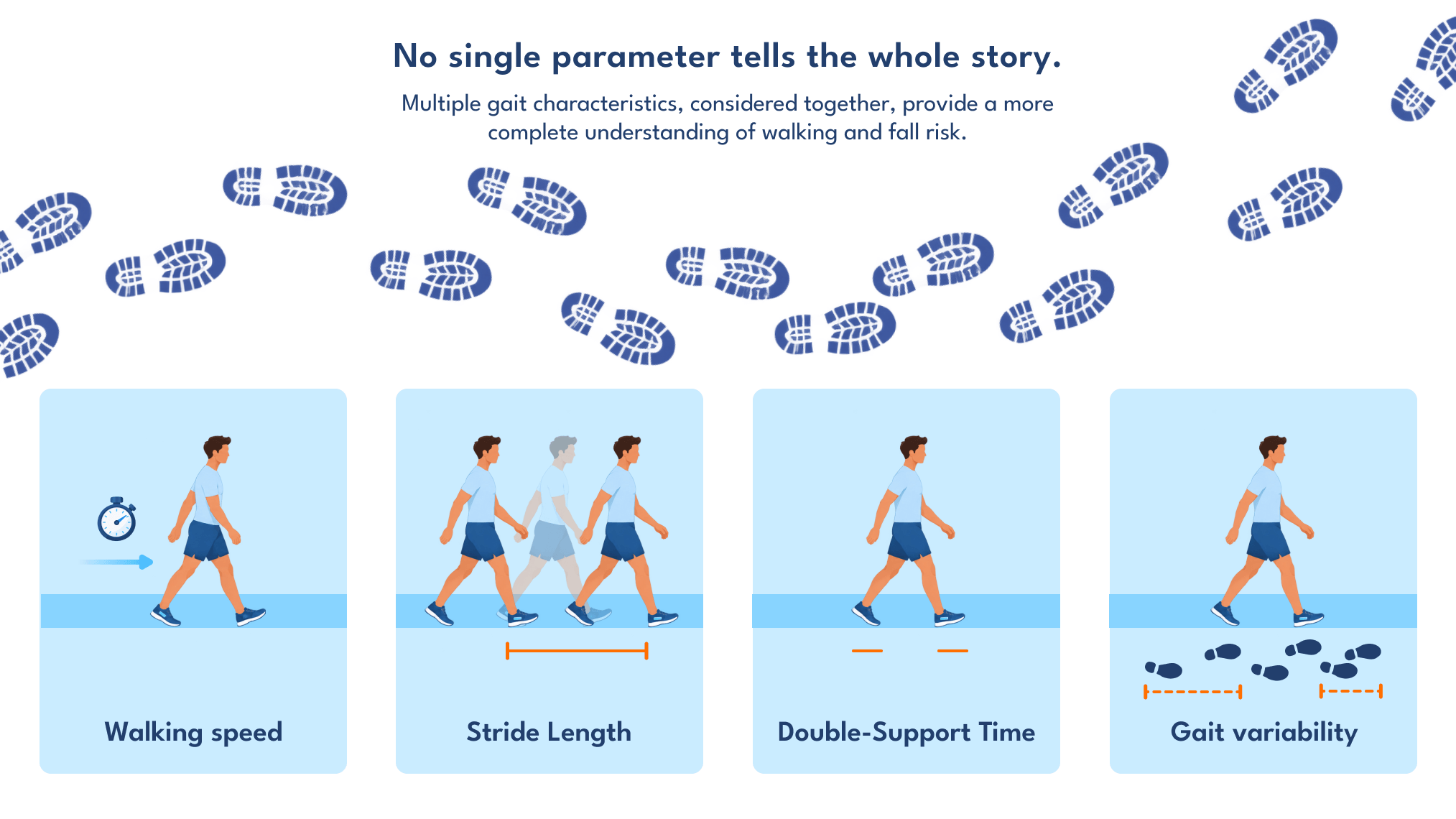
Falls are complex events influenced by many interacting factors. Since walking requires coordination of balance, sensory information, muscle function, attention, and movement, changes in gait can provide measurable data about how a person walks. Research has identified several gait characteristics associated with an increased risk of falling, including slower walking speed, shorter steps and strides, longer double-support time, and greater gait variability.
However, no single gait parameter can determine whether someone will fall. Instead, gait measurements provide different pieces of information about walking performance. Considering multiple gait characteristics, documenting how they change over time, and measuring gait during standardized assessments and everyday walking provides a broader picture of how a person moves.
Scafa S, de Seta V, Wang R, Sanchez Lopez P, Sanchez Lopez A, Varescon C, et al. Nat Med 2026;32(8):2815-2830. An adaptive deep brain stimulation strategy that adjusts to activity and improves gait in Parkinson's disease. NUSHU was used to capture gait in this study.
Lopez PS, Wang R, Varescon C, Schaer A, Ergeneman O, Chatzipirpiridis G, et al. 2025 47th Annual International Conference of the IEEE Engineering in Medicine and Biology Society (EMBC):1-5. A wearable platform that maps motor and neural biomarkers of gait dysfunction in people with Parkinson's disease across daily life.
Wu J, Becsek B, Schaer A, Maurenbrecher H, Chatzipirpiridis G, Ergeneman O, et al. IEEE J Biomed Health Inform 2023;27(3):1295-1306. Gait phase detection that runs in real time on the wearable itself, validated on free-living gait outside the laboratory.
Ricerca sottoposta a revisione paritaria
Pubblicazioni
La tecnologia di NUSHU si basa su una rigorosa ricerca scientifica e sulla validazione clinica. Collaboriamo con i principali istituti di ricerca e professionisti sanitari in tutto il mondo per far progredire la comprensione del movimento umano e migliorare i risultati della mobilità.
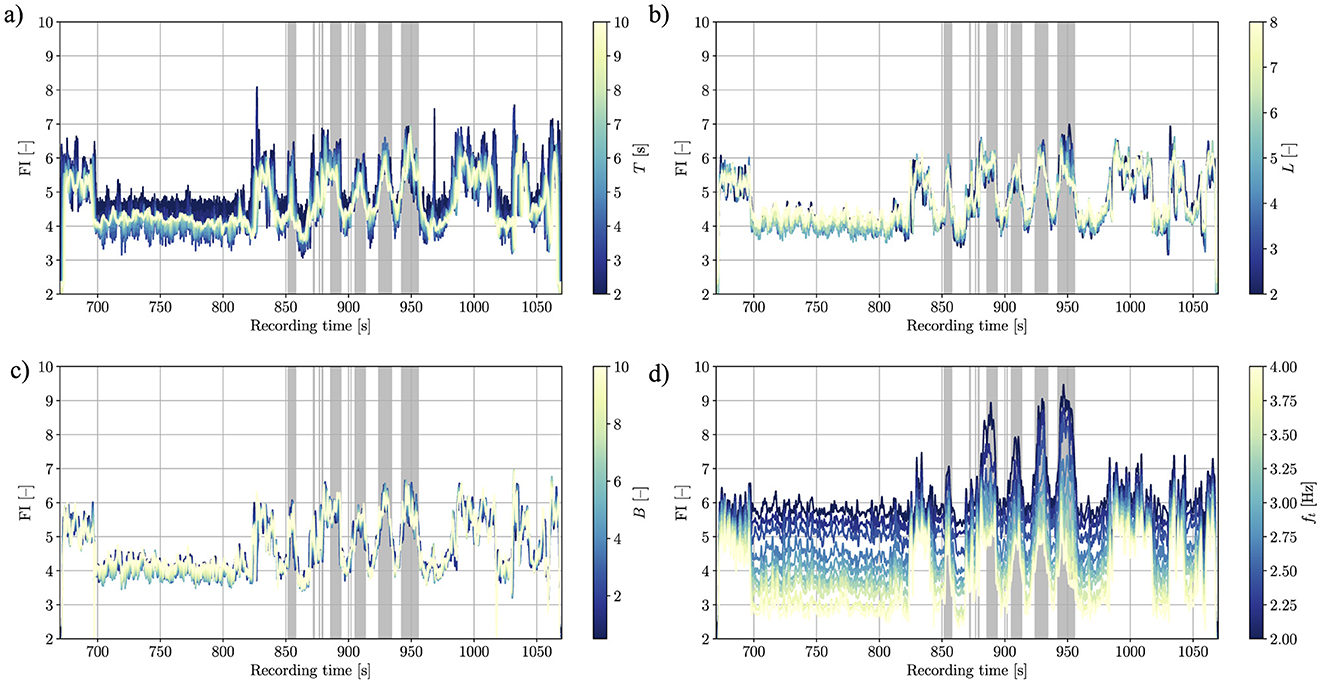
I metodi automatici per il rilevamento del FOG (congelamento della marcia) tramite l'indice di congelamento (FI) sono stati ampiamente proposti per monitorare sistematicamente il FOG nella vita reale e guidare l'ottimizzazione della terapia. Tuttavia, i metodi per stimare il FI si sono basati su una vasta gamma di tecnologie di misurazione e metodologie computazionali, spesso prive di rigore matematico. Questa mancanza di standardizzazione ha ostacolato gravemente l'accettazione del FI da parte delle agenzie di regolamentazione come misura riproducibile, robusta, efficace e sicura su cui basare ulteriori sviluppi. In questo studio, formalizziamo la definizione del FI e proponiamo un algoritmo di stima rigoroso ed esplicito, che possa servire come standard per le applicazioni future. Questa standardizzazione fornisce un benchmark coerente e affidabile.
Il deterioramento della marcia può essere utilizzato come biomarcatore per l'invecchiamento e le malattie neurologiche.
Il monitoraggio e l'analisi continui della marcia sono essenziali per il rilevamento precoce dei deficit e per una riabilitazione personalizzata.
L'uso di sistemi di sensori inerziali mobili e indossabili per il monitoraggio e l'analisi della marcia è stato ben esplorato con risultati promettenti in letteratura.
In questo lavoro, abbiamo sviluppato un sistema di analisi della marcia basato su sensori inerziali integrati nelle calzature per il monitoraggio in tempo reale e abbiamo studiato la frequenza di campionamento ottimale per acquisire tutte le informazioni sui modelli di camminata.
Uno studio di validazione esplorativo è stato eseguito utilizzando un sistema ottico di cattura del movimento su quattro soggetti adulti sani.
I sistemi di cattura del movimento sono ampiamente accettati come gold standard per l'analisi della marcia e vengono utilizzati per la validazione di altri sistemi di analisi. Ad oggi, la loro affidabilità e i loro limiti nell'etichettatura manuale degli eventi della marcia non sono stati studiati.
Obiettivi: Valutare l'incertezza dell'etichettatura manuale e introdurre un modello ibrido di rilevamento del passo e di stima degli eventi della marcia per il monitoraggio autonomo, a lungo termine e remoto.
Metodi: Stimare le incongruenze tra gli etichettatori calcolando i limiti di concordanza. Sviluppare un modello ibrido basato sulla deformazione temporale dinamica e su una rete neurale convoluzionale per identificare i passi validi ed eliminare i dati non relativi al passo nei dati inerziali (camminata) raccolti da un dispositivo indossabile. Infine, rilevare gli eventi della marcia all'interno di una regione di passo valida.
White Paper
Presto aggiungeremo una raccolta dei nostri white paper.