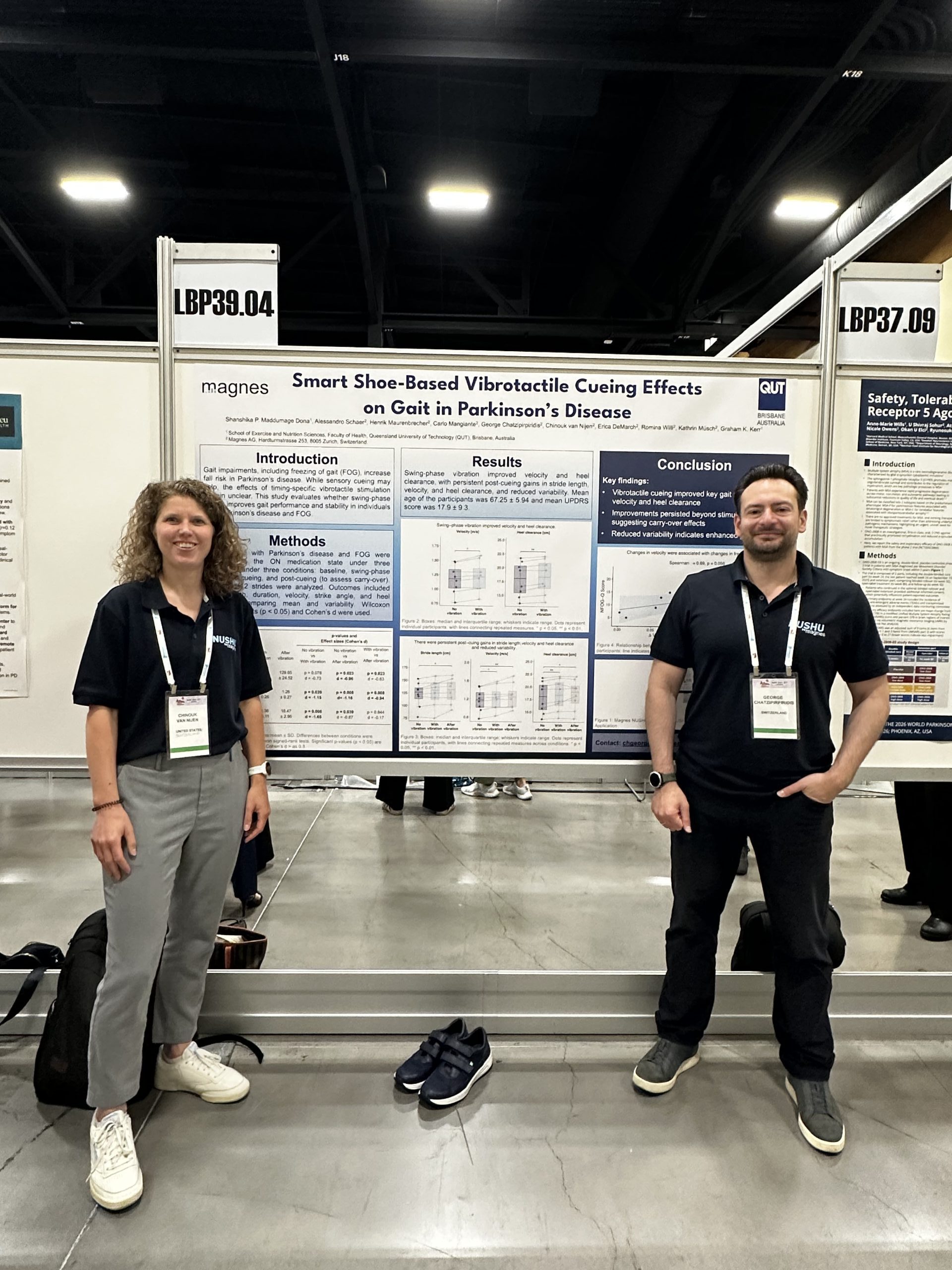
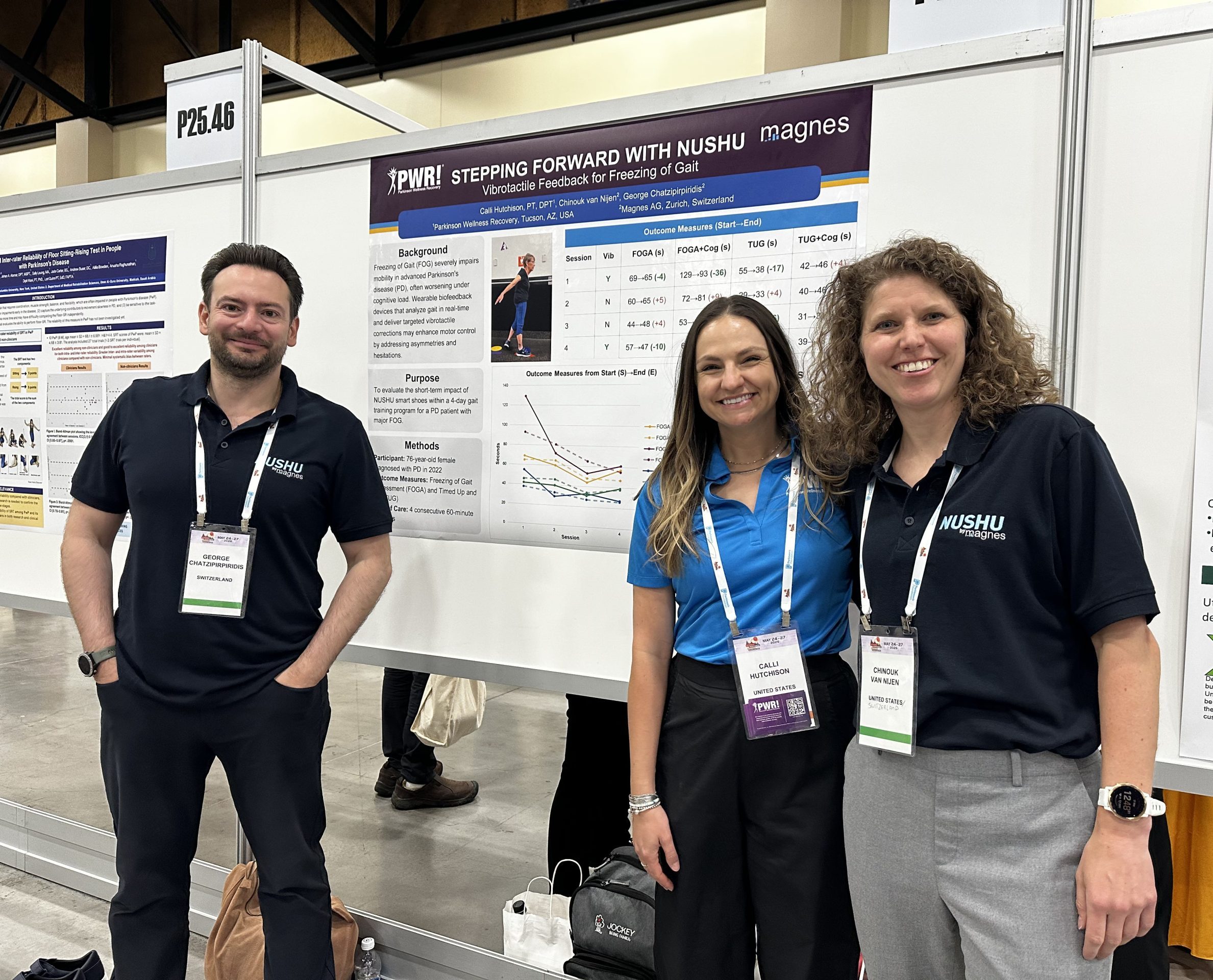
Continuous gait monitoring is important in Parkinson’s Disease (PD) as gait deteriorates with disease progression and responses to treatment vary over time. Wearable sensor systems offer a practical alternative to laboratory-based gait assessment for real-world monitoring. This study aimed to (1) validate spatiotemporal gait parameters derived from the NUSHU smart shoe system against the Vicon motion capture system in healthy older adults and individuals with PD, and (2) assess whether measurement agreement was maintained during active vibrotactile feedback delivery. Thirty-two participants (17 with mild to moderate PD and 15 age- and gender-matched healthy older adults; mean age 67 ± 7.4 years) completed overground walking trials under no vibration, stance phase vibration, and swing phase vibration conditions. A total of 4790 strides were analysed using linear mixed effects models. Overall agreement was good for stride length (ICC = 0.894, CCC = 0.926), stride time (ICC = 0.853, CCC = 0.954), and velocity (ICC = 0.885, CCC = 0.940), with moderate agreement for double support time (ICC = 0.752, CCC = 0.477). Agreement remained consistent across vibration conditions in both groups.
Documentos técnicos
Vibrotactile Feedback for Gait Rehabilitation
Walking impairments are a major cause of reduced mobility, falls, and loss of independence in individuals with neurological disorders and age-related mobility decline. As the demand for effective rehabilitation continues to grow, there is increasing interest in technologies that can support gait training beyond the clinical setting.
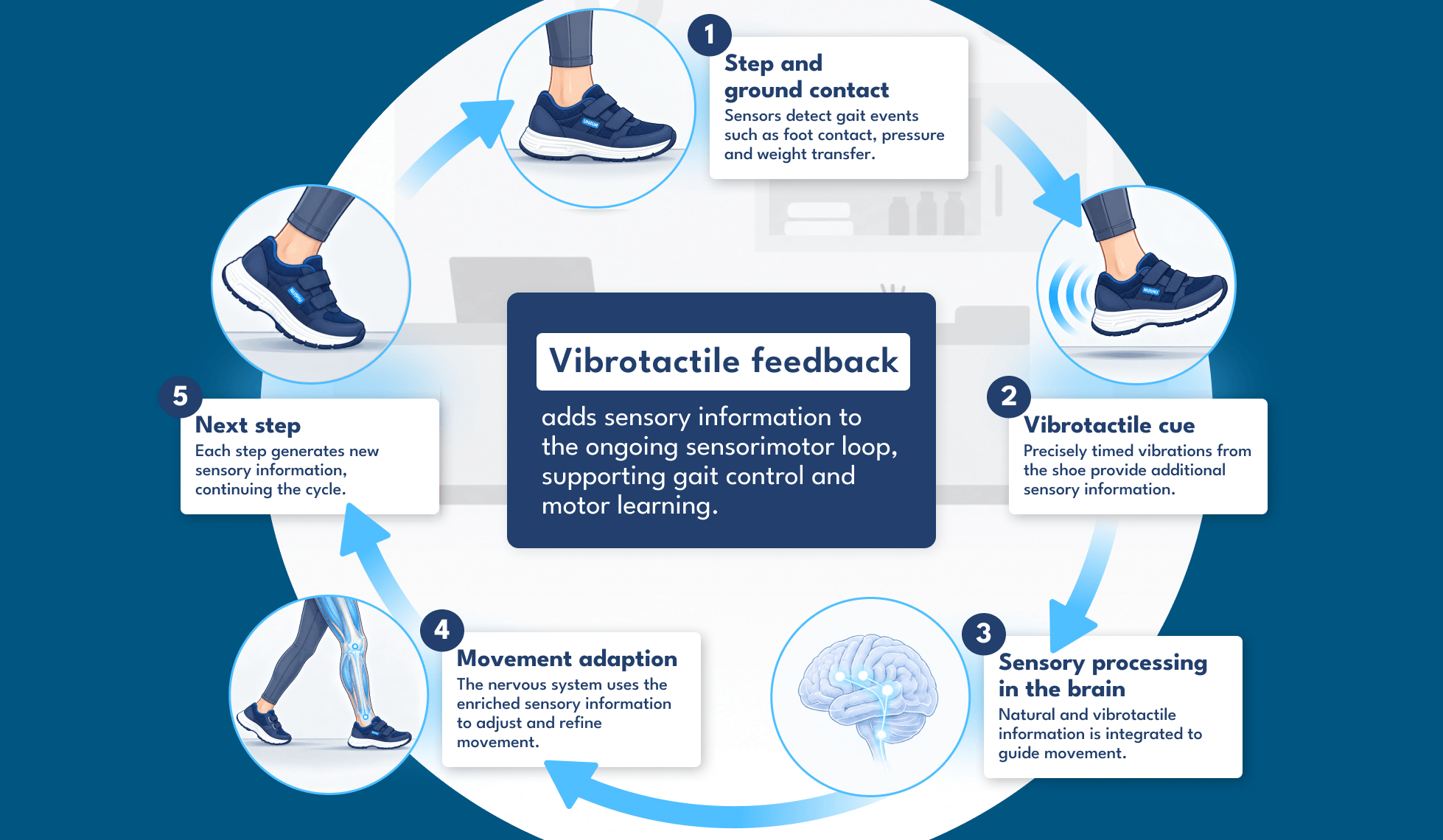
Wearable vibrotactile feedback is one such approach. By delivering precisely timed tactile cues during walking, these systems augment the sensory information available to the nervous system, supporting gait control and motor learning rather than replacing natural movement. A growing body of research demonstrates that vibration can influence proprioception, enhance sensorimotor processing, and improve clinically relevant aspects of gait.
This paper reviews the scientific principles underlying wearable vibrotactile feedback, summarizes the current clinical evidence, and discusses how these findings support the development of wearable rehabilitation technologies for improving gait and functional mobility.
Documentos técnicos
Walking: How the Nervous System Shapes Every Step
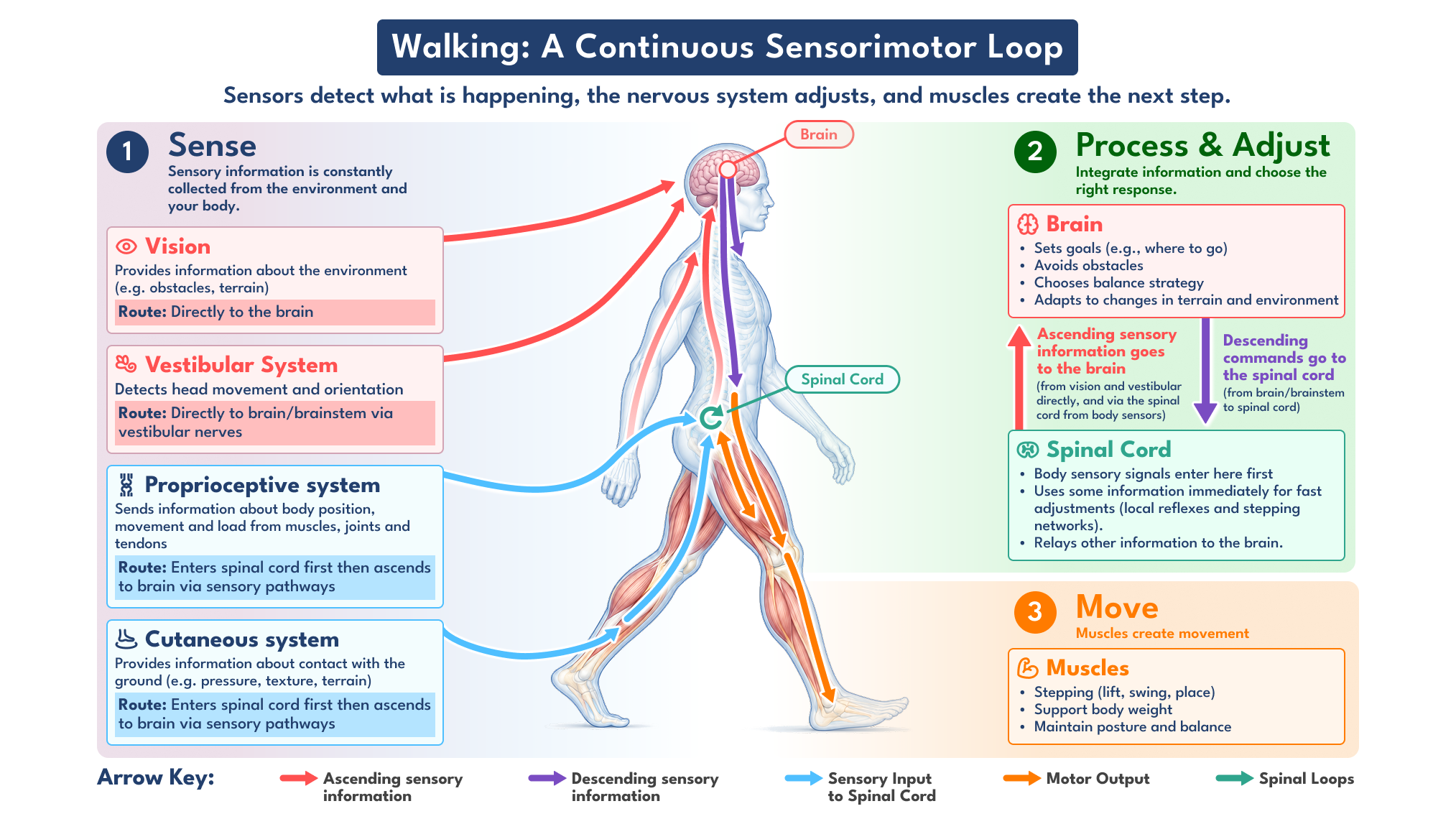
Walking is a fundamental part of everyday life, playing an important role in mobility and independence. Although it often feels automatic, each step requires constant coordination between the nervous system, sensory systems and muscles.
Movement relies on an ongoing sensorimotor loop: the nervous system coordinates movement while receiving continuous sensory feedback from the body and environment to help guide and adapt each step. Changes in gait may result when this communication is affected by neurological injury or disease.
Objective gait measurement can describe characteristics such as walking speed, step length, timing, symmetry and variability. Considering multiple gait parameters and how they change over time can provide a more detailed picture of how a person moves.
Documentos técnicos
From Perception to Movement
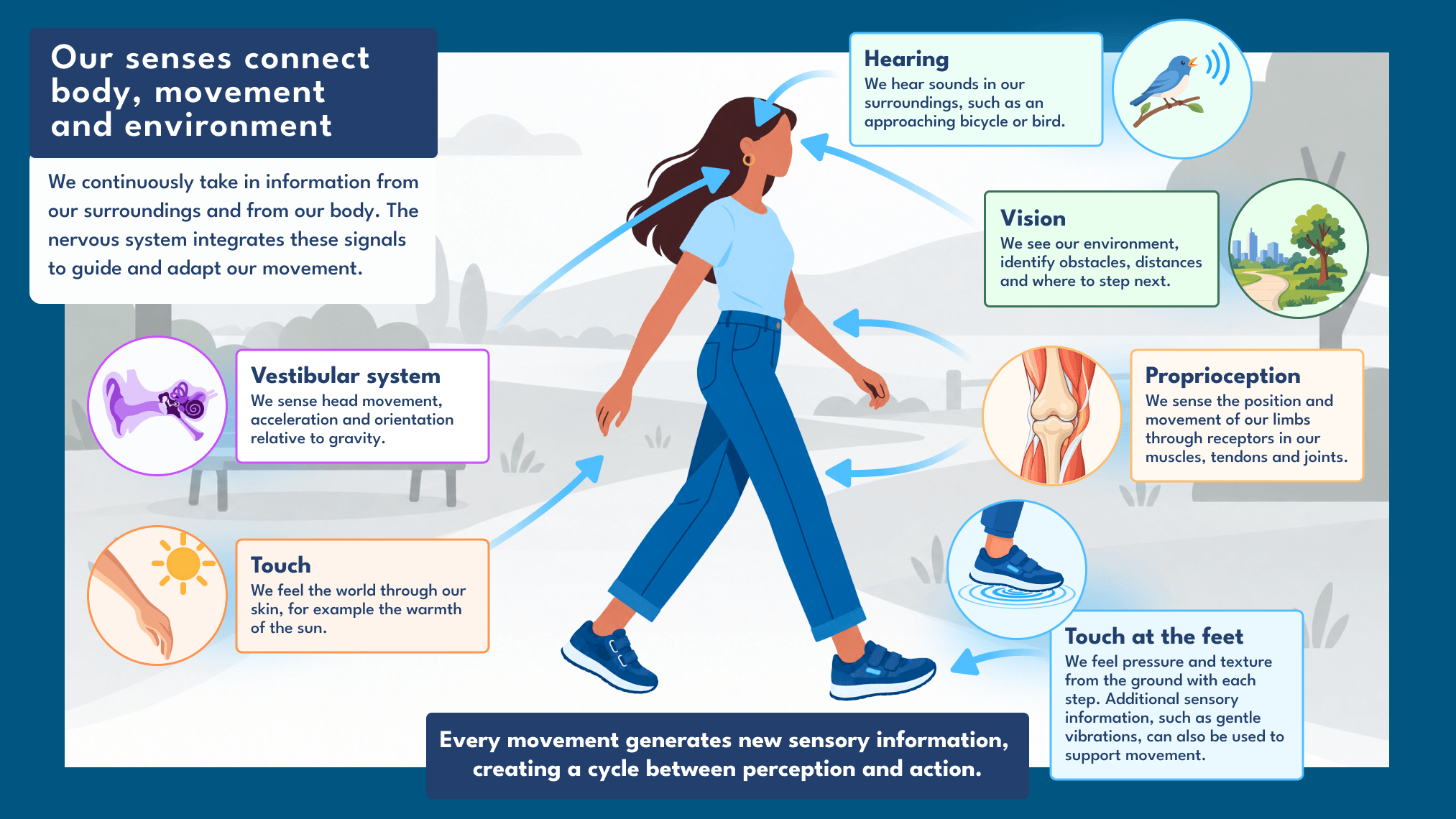
Humans use sensory information continuously to perceive their surroundings, understand the position and movement of their body, and adapt to a changing environment. While sight, hearing, smell, taste, and touch are familiar to most of us, less familiar senses also play an important role in how we move.
Walking is a remarkable example of sensory information working together. Vision provides information about the environment, proprioception about the position and movement of the body, and the vestibular system about movement and orientation. The nervous system continuously integrates this information to guide and adapt movement. Understanding this interaction also introduces the concept of sensory augmentation, in which additional sensory information, such as vibrotactile feedback, can become part of this ongoing exchange.
Documentos técnicos
What Gait Can Tell Us About Fall Risk
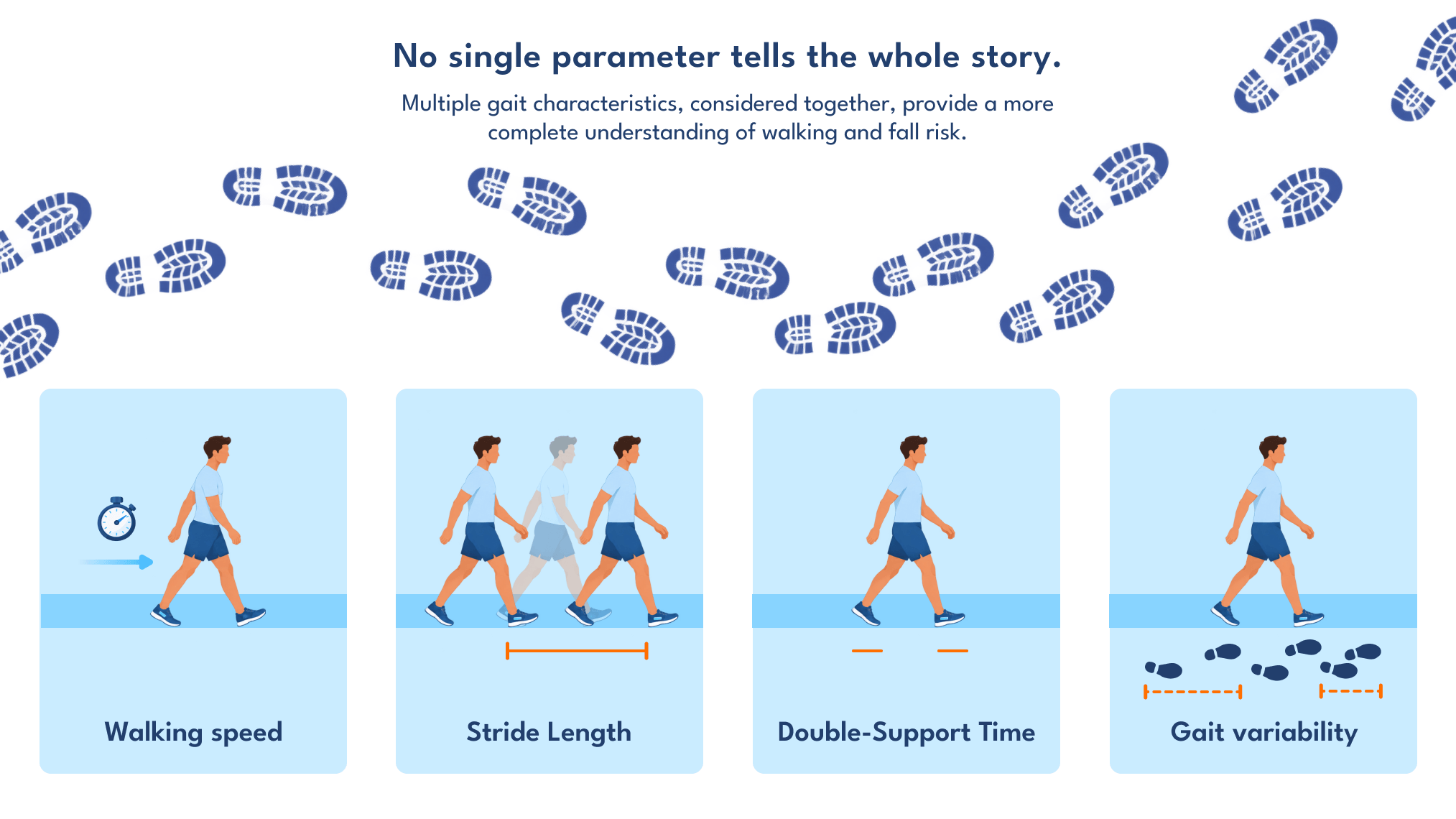
Falls are complex events influenced by many interacting factors. Since walking requires coordination of balance, sensory information, muscle function, attention, and movement, changes in gait can provide measurable data about how a person walks. Research has identified several gait characteristics associated with an increased risk of falling, including slower walking speed, shorter steps and strides, longer double-support time, and greater gait variability.
However, no single gait parameter can determine whether someone will fall. Instead, gait measurements provide different pieces of information about walking performance. Considering multiple gait characteristics, documenting how they change over time, and measuring gait during standardized assessments and everyday walking provides a broader picture of how a person moves.
Scafa S, de Seta V, Wang R, Sanchez Lopez P, Sanchez Lopez A, Varescon C, et al. Nat Med 2026;32(8):2815-2830. An adaptive deep brain stimulation strategy that adjusts to activity and improves gait in Parkinson's disease. NUSHU was used to capture gait in this study.
Lopez PS, Wang R, Varescon C, Schaer A, Ergeneman O, Chatzipirpiridis G, et al. 2025 47th Annual International Conference of the IEEE Engineering in Medicine and Biology Society (EMBC):1-5. A wearable platform that maps motor and neural biomarkers of gait dysfunction in people with Parkinson's disease across daily life.
Wu J, Becsek B, Schaer A, Maurenbrecher H, Chatzipirpiridis G, Ergeneman O, et al. IEEE J Biomed Health Inform 2023;27(3):1295-1306. Gait phase detection that runs in real time on the wearable itself, validated on free-living gait outside the laboratory.
Investigación revisada por pares
Publicaciones
La tecnología de NUSHU se basa en una rigurosa investigación científica y validación clínica. Colaboramos con instituciones de investigación líderes y profesionales sanitarios de todo el mundo para avanzar en la comprensión del movimiento humano y mejorar los resultados de movilidad.
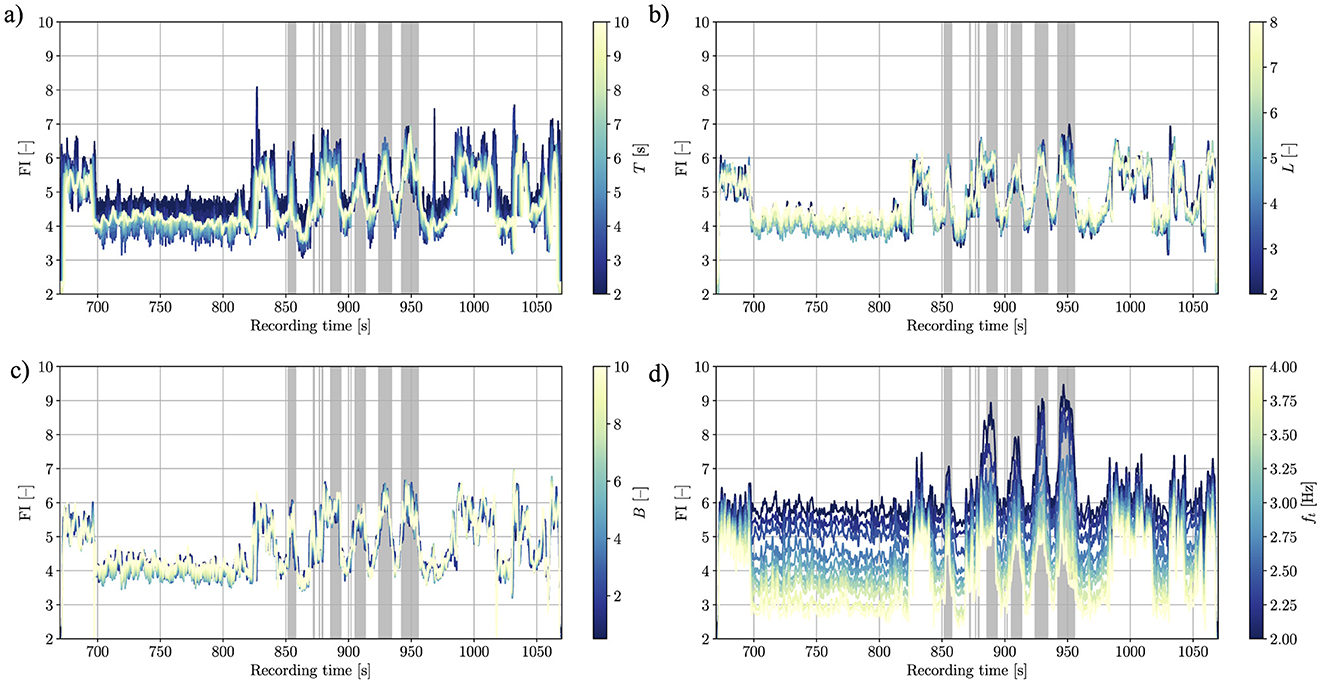
Los métodos automáticos para detectar FOG utilizando el índice de congelación (FI) se han propuesto ampliamente para monitorizar sistemáticamente el FOG en la vida real y guiar las optimizaciones terapéuticas. Sin embargo, los métodos para estimar el FI se han basado en una amplia gama de tecnologías de medición y metodologías computacionales, a menudo carentes de rigor matemático. Esta falta de estandarización ha obstaculizado gravemente la aceptación del FI por parte de las agencias reguladoras como una medida reproducible, robusta, efectiva y segura sobre la cual basar desarrollos futuros. En este estudio, formalizamos la definición del FI y proponemos un algoritmo de estimación riguroso y explícito, que puede servir como estándar para aplicaciones futuras. Esta estandarización proporciona un punto de referencia consistente y fiable.
El deterioro de la marcha puede utilizarse como biomarcador del envejecimiento y las enfermedades neurológicas.
La monitorización y el análisis continuos de la marcha son esenciales para la detección temprana de déficits y la rehabilitación
personalizada. El uso de sistemas móviles y portátiles de sensores inerciales para la monitorización y el análisis de la marcha se ha
explorado ampliamente con resultados prometedores en la literatura. En este trabajo, hemos desarrollado un
sistema de análisis de la marcha integrado en el calzado basado en sensores inerciales para la monitorización de la marcha en tiempo real e investigamos la
frecuencia de muestreo óptima para capturar toda la información sobre los patrones de marcha. Se realizó un estudio de validación
exploratoria utilizando un sistema de captura de movimiento óptico en cuatro sujetos adultos sanos.
Los sistemas de captura de movimiento son ampliamente aceptados como referencia para el análisis de la marcha y se utilizan para la validación de otros sistemas de análisis de la marcha. Hasta la fecha, su fiabilidad y limitaciones en el etiquetado manual de eventos de la marcha no se han estudiado.
Objetivos: Evaluar la incertidumbre del etiquetado manual e introducir un modelo híbrido de detección de zancadas y estimación de eventos de la marcha para la monitorización autónoma, a largo plazo y remota.
Métodos: Estimar las inconsistencias entre etiquetadores calculando los límites de concordancia. Desarrollar un modelo híbrido basado en alineamiento temporal dinámico y red neuronal convolucional para identificar zancadas válidas y eliminar datos que no correspondan a zancadas en datos inerciales (de marcha) recopilados por un dispositivo portátil. Finalmente, detectar eventos de la marcha dentro de una región de zancada válida.
Libros blancos
Próximamente añadiremos una colección de nuestros libros blancos.