הגישה המדעית שלנו נשענת על עשרות שנים של חקר המוח ומחקר קליני.
בעמוד זה +
הערכת הליכה
למדוד את מה שחשוב
מדוע הערכה אובייקטיבית של ההליכה חיונית להבנת הניידות.
הליכה היא מרכיב בסיסי בניידות ובעצמאות בחיי היום־יום. מאחר שההליכה עשויה להשתנות בהדרגה או בעקבות התערבויות טיפוליות, הערכה אובייקטיבית חיונית לתיעוד הניידות והיכולת התפקודית. הערכות הליכה מתוקננות מספקות מדדים מהימנים וניתנים לשחזור, המאפשרים להעריך את יכולת ההליכה באופן עקבי בסביבות שונות ובבדיקות חוזרות.
פותחו הערכות קליניות מתוקפות, ובהן מבחן ההליכה לשש דקות [1], מבחן Timed Up & Go [2] ופוסטורוגרפיה [3], לבחינת היבטים שונים של הליכה וניידות, כגון סבולת הליכה, ניידות תפקודית ושיווי משקל. לצד הערכות מתוקננות נוספות, הן מאפשרות לתעד שינויים באופן עקבי לאורך זמן, גם לפני התערבויות טיפוליות ואחריהן.
מכיוון שאין הערכה אחת המקיפה את כל היבטי ההליכה, אנשי מקצוע וחוקרים משלבים לעיתים כמה מבחנים כדי לקבל תמונה מקיפה של הניידות, שיווי המשקל ותפקוד הגפיים התחתונות. כך ניתן לבצע הערכה מלאה יותר של ההליכה ולמדוד באופן אובייקטיבי את היכולת התפקודית לאורך זמן.
משוב רטט־מישוש נחקר כבר יותר מ־50 שנה כאמצעי להשפעה על התפיסה התחושתית ועל השליטה המוטורית [1,2].
מחקרים הראו כי רטט המופעל בדיוק יכול להפעיל קולטנים פרופריוצפטיביים וקולטנים בעור, ולספק מידע תחושתי נוסף התומך בתנועה, בשיווי המשקל ובהליכה [1–3].
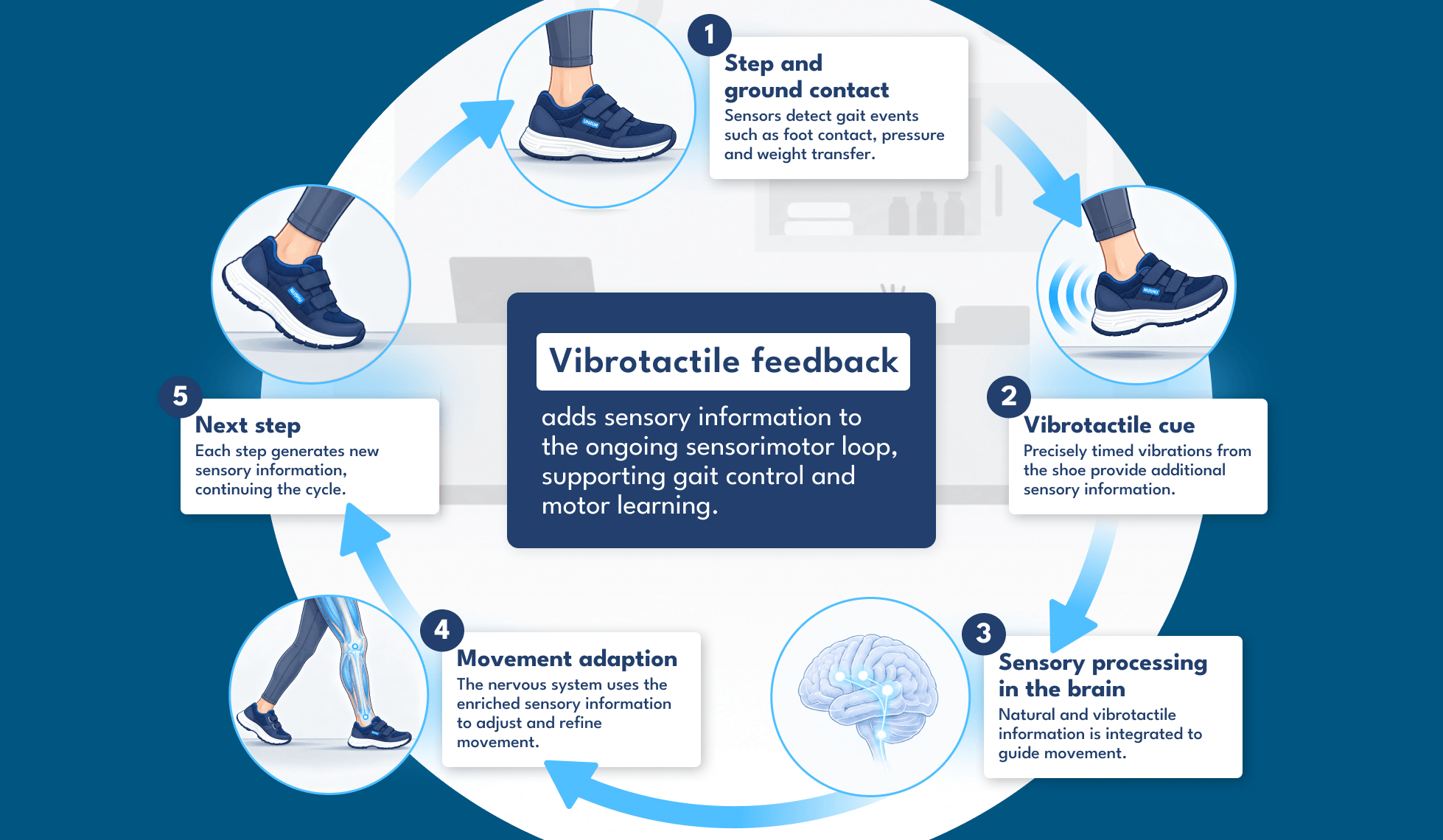
בהליכה, משוב רטט־מישוש מעשיר את המידע הזמין למערכת העצבים ועוזר למוח לתפוס טוב יותר את מנח הגוף ואת תנועתו. תהליך זה, הנקרא הגברה תחושתית, עשוי לשפר את השליטה בהליכה ולעודד דפוסי תנועה יעילים יותר [4,5].
בשנים האחרונות טכנולוגיות לבישות הביאו עקרונות אלה לתחום השיקום. מחקרים קליניים הראו כי משוב רטט־מישוש באמצעות מכשירים לבישים עשוי לשפר מאפייני הליכה, שיווי משקל וניידות תפקודית אצל אנשים עם ליקויים נוירולוגיים ותחושתיים [6–10].
שילוב הערכה אובייקטיבית של ההליכה ומשוב רטט־מישוש בזמן אמת בפלטפורמה אחת.
הערכה אובייקטיבית של ההליכה ומשוב רטט־מישוש בזמן אמת הם שתי גישות משלימות להבנת התנועה האנושית. הערכות מתוקננות מכמתות היבטים של ביצועי ההליכה, שיווי המשקל והניידות, ומשוב רטט־מישוש מספק מידע תחושתי נוסף באמצעות אותות מישוש המתוזמנים במדויק.
באופן מסורתי, הערכת ההליכה והשיקום בוצעו כתהליכים נפרדים. התקדמות בטכנולוגיות חישה ומשוב מאפשרת כיום לשלבם בפלטפורמה אחת. כך ניתן להעריך את ההליכה באופן אובייקטיבי ובמקביל לספק משוב רטט־מישוש בזמן אמת, תוך יצירת קשר רציף בין המדידה למשוב.
השילוב מאפשר גם לאסוף נתוני הליכה אובייקטיביים בזמן אותה פעילות שבה ניתן המשוב התחושתי. במקום להסתמך רק על הערכות נקודתיות לפני התערבויות טיפוליות או אחריהן, ניתן לתעד את ההליכה ברציפות. גישה זו משקפת את השימוש הגובר בטכנולוגיות לבישות לאיסוף נתוני תנועה אובייקטיביים בסביבות יום־יומיות.
זהו תחום מחקר מתפתח בטכנולוגיות שיקום לבישות. שילוב ניתוח כמותי של תנועה עם הגברה תחושתית פותח אפשרות להרחיב את הערכת ההליכה והשיקום לפעילויות היום־יום, תוך הערכות חוזרות ומשוב בהליכה טבעית מחוץ למסגרות הקליניות המסורתיות.
Continuous gait monitoring is important in Parkinson’s Disease (PD) as gait deteriorates with disease progression and responses to treatment vary over time. Wearable sensor systems offer a practical alternative to laboratory-based gait assessment for real-world monitoring. This study aimed to (1) validate spatiotemporal gait parameters derived from the NUSHU smart shoe system against the Vicon motion capture system in healthy older adults and individuals with PD, and (2) assess whether measurement agreement was maintained during active vibrotactile feedback delivery. Thirty-two participants (17 with mild to moderate PD and 15 age- and gender-matched healthy older adults; mean age 67 ± 7.4 years) completed overground walking trials under no vibration, stance phase vibration, and swing phase vibration conditions. A total of 4790 strides were analysed using linear mixed effects models. Overall agreement was good for stride length (ICC = 0.894, CCC = 0.926), stride time (ICC = 0.853, CCC = 0.954), and velocity (ICC = 0.885, CCC = 0.940), with moderate agreement for double support time (ICC = 0.752, CCC = 0.477). Agreement remained consistent across vibration conditions in both groups.
מסמכי מחקר
Vibrotactile Feedback for Gait Rehabilitation
Walking impairments are a major cause of reduced mobility, falls, and loss of independence in individuals with neurological disorders and age-related mobility decline. As the demand for effective rehabilitation continues to grow, there is increasing interest in technologies that can support gait training beyond the clinical setting.
Wearable vibrotactile feedback is one such approach. By delivering precisely timed tactile cues during walking, these systems augment the sensory information available to the nervous system, supporting gait control and motor learning rather than replacing natural movement. A growing body of research demonstrates that vibration can influence proprioception, enhance sensorimotor processing, and improve clinically relevant aspects of gait.
This paper reviews the scientific principles underlying wearable vibrotactile feedback, summarizes the current clinical evidence, and discusses how these findings support the development of wearable rehabilitation technologies for improving gait and functional mobility.
מסמכי מחקר
Walking: How the Nervous System Shapes Every Step
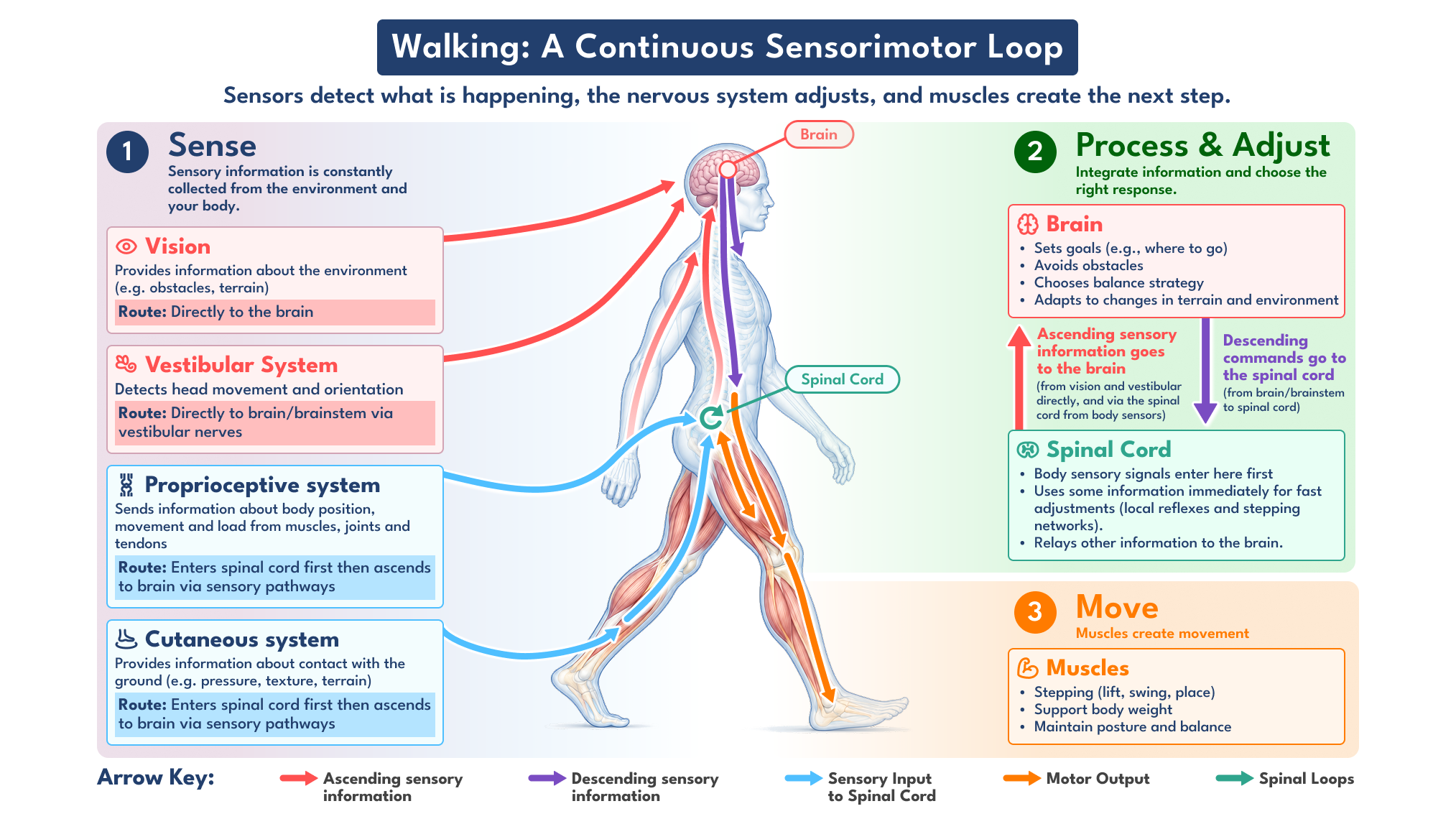
Walking is a fundamental part of everyday life, playing an important role in mobility and independence. Although it often feels automatic, each step requires constant coordination between the nervous system, sensory systems and muscles.
Movement relies on an ongoing sensorimotor loop: the nervous system coordinates movement while receiving continuous sensory feedback from the body and environment to help guide and adapt each step. Changes in gait may result when this communication is affected by neurological injury or disease.
Objective gait measurement can describe characteristics such as walking speed, step length, timing, symmetry and variability. Considering multiple gait parameters and how they change over time can provide a more detailed picture of how a person moves.
מסמכי מחקר
From Perception to Movement
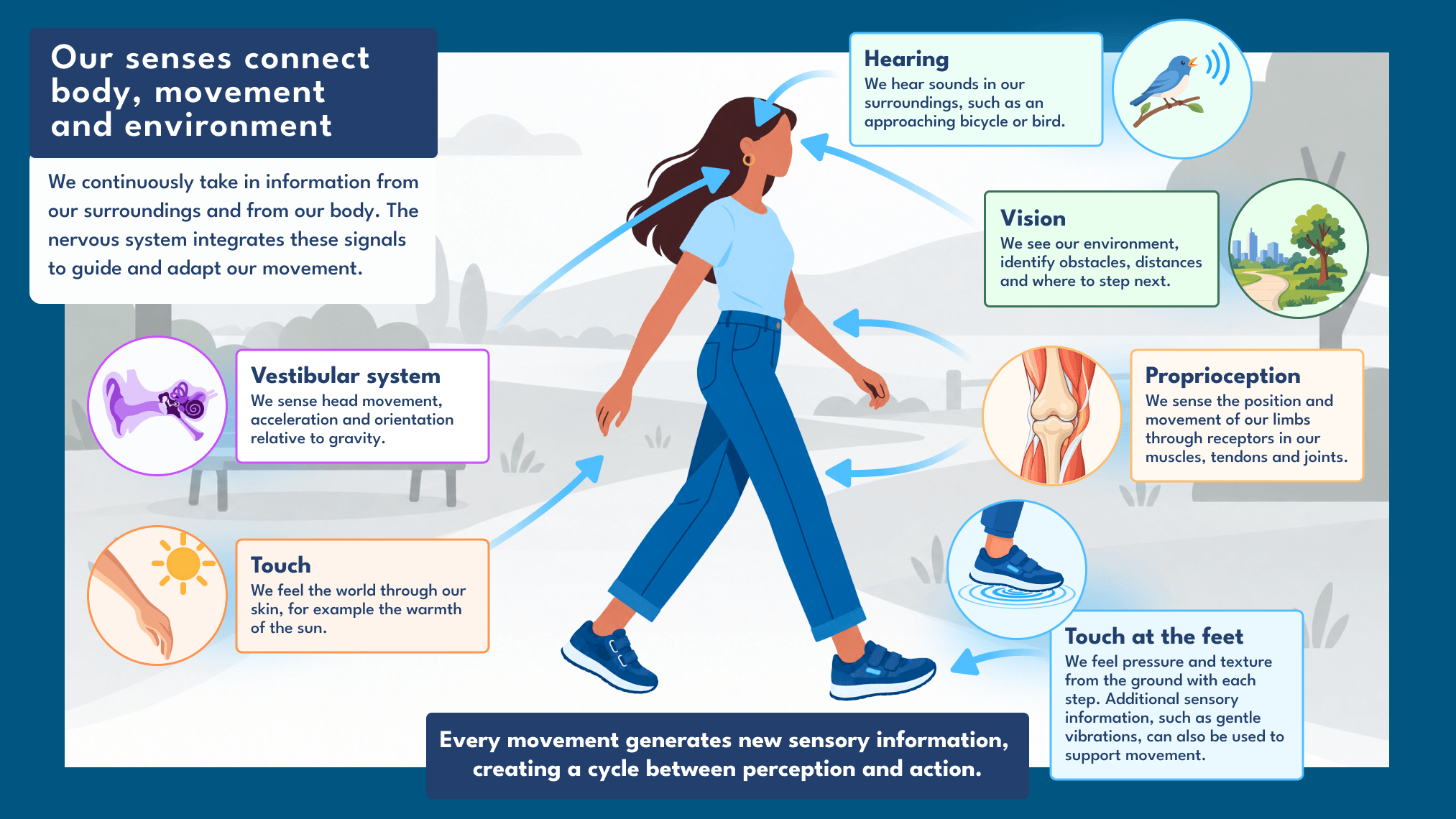
Humans use sensory information continuously to perceive their surroundings, understand the position and movement of their body, and adapt to a changing environment. While sight, hearing, smell, taste, and touch are familiar to most of us, less familiar senses also play an important role in how we move.
Walking is a remarkable example of sensory information working together. Vision provides information about the environment, proprioception about the position and movement of the body, and the vestibular system about movement and orientation. The nervous system continuously integrates this information to guide and adapt movement. Understanding this interaction also introduces the concept of sensory augmentation, in which additional sensory information, such as vibrotactile feedback, can become part of this ongoing exchange.
מסמכי מחקר
What Gait Can Tell Us About Fall Risk
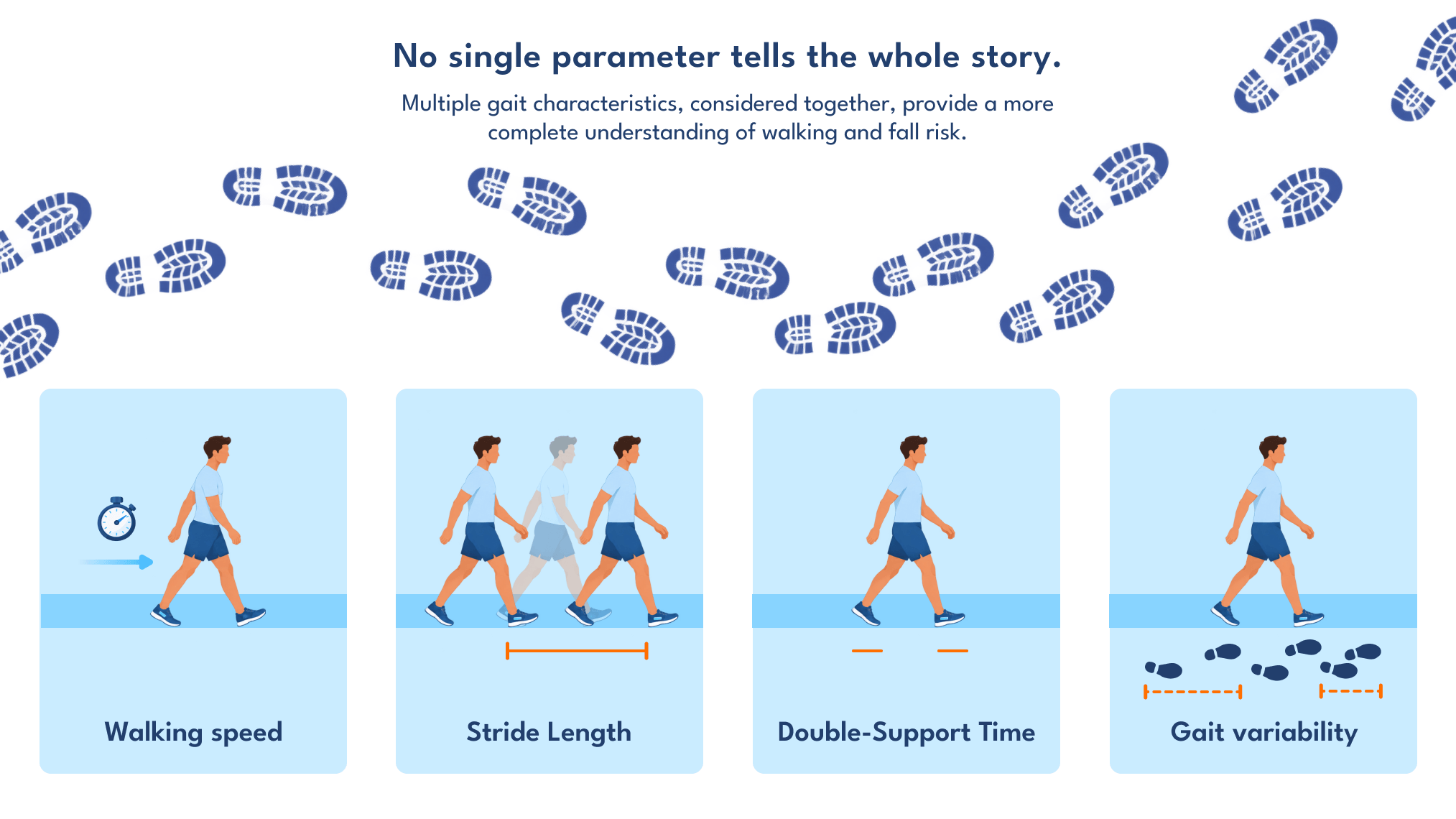
Falls are complex events influenced by many interacting factors. Since walking requires coordination of balance, sensory information, muscle function, attention, and movement, changes in gait can provide measurable data about how a person walks. Research has identified several gait characteristics associated with an increased risk of falling, including slower walking speed, shorter steps and strides, longer double-support time, and greater gait variability.
However, no single gait parameter can determine whether someone will fall. Instead, gait measurements provide different pieces of information about walking performance. Considering multiple gait characteristics, documenting how they change over time, and measuring gait during standardized assessments and everyday walking provides a broader picture of how a person moves.
Neuromobility מחברת בין תנועה, משוב תחושתי ונתונים. Magnes משלבת את המרכיבים האלה ב־NUSHU, פלטפורמה לבישה לניתוח הליכה, המיועדת לעבודה קלינית ולהליכה בחיי היום־יום.
ניתוח הליכה
מתנועה לתובנות
החיישנים ב־NUSHU אוספים נתוני הליכה. הניתוח מסייע לאנשי המקצוע לבחון דפוסי הליכה, והיישומון ולוח הבקרה מחברים בין הפעילות מחוץ למרפאה לבין המשך הטיפול.
איך המשוב עובד
משוב בזמן התנועה
אותות רטט־מישוש מספקים משוב דרך כפות הרגליים בזמן ההליכה. אנשי המקצוע יכולים להתאים את הרטט לקשיי ההליכה ולמטרות הטיפול האישיות. NUSHU תומכת בפרשנות קלינית; היא אינה כלי אבחון עצמאי.
הפלטפורמה
שני מסלולים. מערכת מחוברת אחת.
עבור אנשים ומשפחות
הכירו את NUSHU ומצאו מרכז שבו תוכלו לבדוק אם היא מתאימה לצרכים שלכם.