Walking is a fundamental aspect of everyday mobility and independence. Because gait can change gradually over time or in response to therapeutic interventions, objective assessment is essential for documenting mobility and functional performance. Standardized gait assessments provide reliable and reproducible measures that allow walking ability to be evaluated consistently across different settings and over repeated assessments.
Science
Our scientific approach builds upon decades of neuroscience and clinical research

Our method of measurement
Measuring What Matters
Why objective gait assessment is essential for understanding mobility.
A variety of validated clinical assessments, including the 6-Minute Walk Test [1], the Timed Up & Go Test [2], and posturography [3], have been developed to evaluate different aspects of gait and mobility, including walking endurance, functional mobility, and balance. Together with other standardized assessments, they provide a consistent way to document changes in gait and mobility over time, including before and after therapeutic interventions.
Because no single assessment captures every aspect of walking performance, clinicians and researchers often combine multiple tests to obtain a comprehensive picture of mobility, balance, and lower-limb function. This enables a more complete evaluation of gait and supports the objective measurement of functional performance over time.
- [1] Crapo RO, Casaburi R, Coates AL, Enright PL, MacIntyre NR, McKay RT, et al. ATS statement: guidelines for the six-minute walk test. Am J Respir Crit Care Med 2002;166:111-7.
- [2] Podsiadlo D, Richardson S. The timed "Up & Go": a test of basic functional mobility for frail elderly persons. J Am Geriatr Soc 1991;39:142-8.
- [3] Visser JE, Carpenter MG, van der Kooij H, Bloem BR. The clinical utility of posturography. Clinical Neurophysiology 2008;119:2424-36.
Our method of action
The Science of Vibrotactile Feedback
Five decades of research on vibration and human movement.
Vibrotactile feedback has been investigated for more than 50 years as a means of influencing sensory perception and motor control [1,2].
Research has shown that precisely delivered vibration can activate proprioceptive and cutaneous receptors, providing additional sensory information that supports movement, balance, and gait [1-3].
As it relates to walking, vibrotactile feedback augments the sensory information available to the nervous system, helping the brain better perceive body position and movement. This process, known as sensory augmentation, can enhance gait control and promote more efficient movement patterns [4,5].
More recently, wearable technologies have translated these principles into rehabilitation. Clinical studies have demonstrated that vibrotactile feedback delivered through wearable devices can improve gait characteristics, balance, and functional mobility in people with neurological and sensory impairments [6-10].
- [1] Goodwin GM, Mccloskey DI, Matthews PBC. Proprioceptive illusions induced by muscle vibration: contribution by muscle spindles to perception? Science 1972;175:1382-4.
- [2] Roll JP, Vedel JP. Kinaesthetic role of muscle afferents in man, studied by tendon vibration and microneurography. Exp Brain Res 1982;47:177-90.
- [3] Strzalkowski NDJ, Ali RA, Bent LR. The firing characteristics of foot sole cutaneous mechanoreceptor afferents in response to vibration stimuli. J Neurophysiol 2017;118:1931-42.
- [4] Visell Y, Giordano BL, Millet G, Cooperstock JR. Vibration influences haptic perception of surface compliance during walking. PLoS One 2011;6.
- [5] Trotman M, Ha PL, Tucker K, Cattagni T, Hatton AL. The effects of plantar surface stimulation on neuromuscular responses during standing balance and gait in healthy and clinical populations: A systematic review. Journal of Electromyography and Kinesiology 2025;82.
- [6] Layne CS, Malaya CA, Levine JT. The effects of muscle vibration on gait control: a review. Somatosens Mot Res 2019;36:212-22.
- [7] Hatton AL, Chatfield MD, Cattagni T, Vicenzino B. The effects of vibrating shoe insoles on standing balance, walking, and ankle-foot muscle activity in adults with diabetic peripheral neuropathy. Gait Posture 2024;111:8-13.
- [8] Cen S, Ma J, Sun H, Zhang H, Li Y, Mao W, et al. Vibrotactile Foot Device for Freezing of Gait in Parkinson's Disease: A Pilot Study. Mov Disord Clin Pract 2024;11:1241-8.
- [9] Bowman T, Pergolini A, Carrozza MC, Lencioni T, Marzegan A, Meloni M, et al. Wearable biofeedback device to assess gait features and improve gait pattern in people with Parkinson's disease: a case series. J Neuroeng Rehabil 2024;21.
- [10] Kirsch P, Helbig M, Rupar D, Baudrexel S, Kell CA. Parkinsonian gait improvement through vibratory stride parameter feedback. Journal of NeuroEngineering and Rehabilitation 2026;23:226.
Platform for Walking
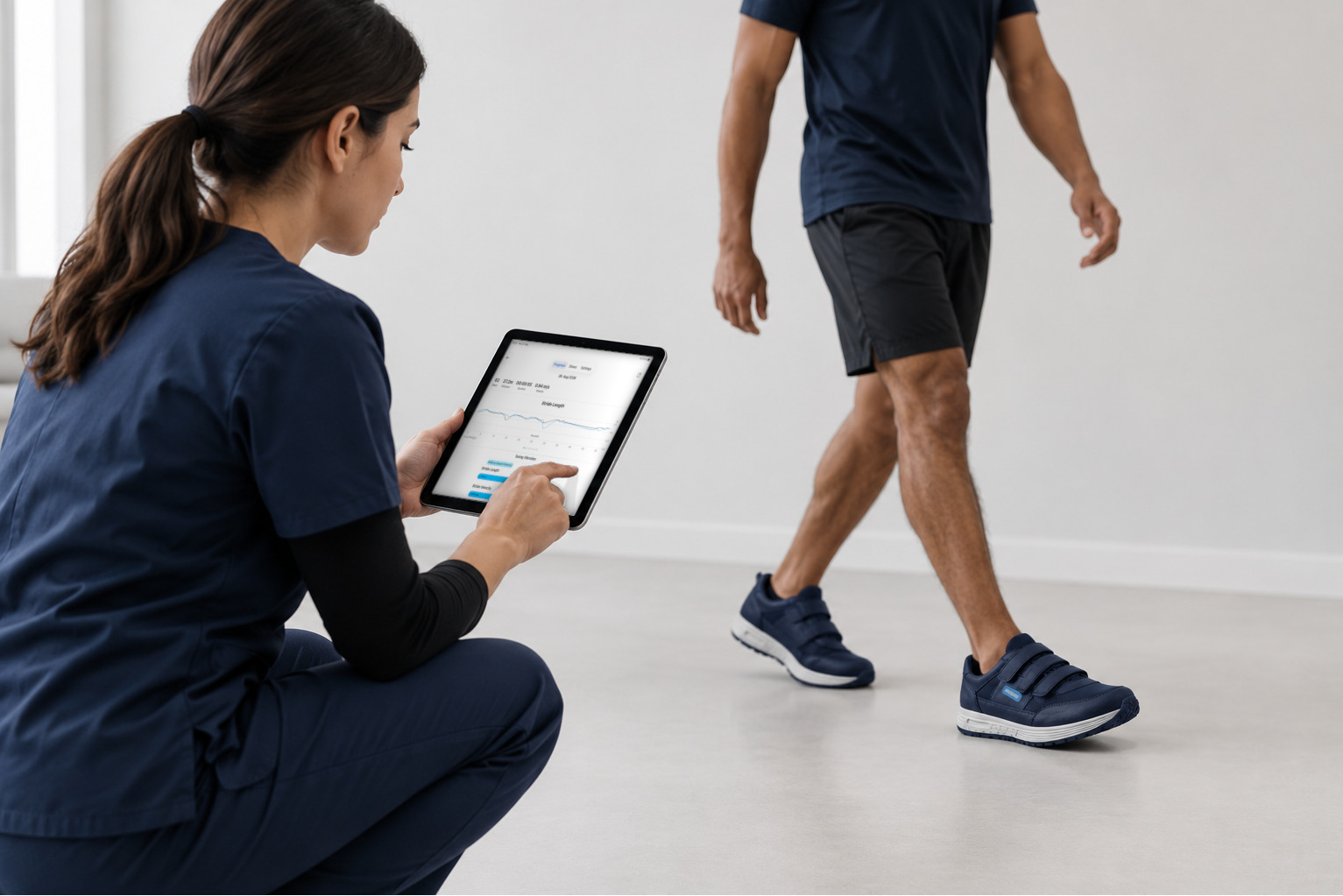
Bringing Measurement and Feedback Together
Bringing objective gait assessment and real-time vibrotactile feedback together within a single platform.
Objective gait assessment and real-time vibrotactile feedback represent two complementary approaches to understanding human movement. While standardized gait assessments quantify different aspects of walking performance, balance, and mobility, vibrotactile feedback provides additional sensory information during walking through precisely timed tactile cues.
Traditionally, gait assessment and rehabilitation have been performed as separate processes. Advances in sensing and feedback technologies now make it possible to bring objective gait assessment and real-time vibrotactile feedback together within a single platform. This allows gait to be objectively assessed while real-time vibrotactile feedback is delivered simultaneously during walking, creating a continuous interaction between measurement and feedback.
Bringing objective gait assessment and real-time vibrotactile feedback together within a single platform also enables objective gait data to be collected while sensory feedback is provided during the same walking activity. Rather than relying solely on isolated assessments performed before or after therapeutic interventions, gait can be documented continuously throughout walking. This approach reflects the growing use of wearable technologies to collect objective movement data in real-world environments.
Bringing objective gait assessment and real-time vibrotactile feedback together within a single platform represents an emerging area of research in wearable rehabilitation technologies. By combining quantitative movement analysis with sensory augmentation, this approach creates the opportunity to extend gait assessment and rehabilitation into everyday activities, enabling repeated assessment and feedback during natural walking beyond traditional clinical settings.
NUSHU Newsletter
Subscribe to the NUSHU newsletter for the latest product updates, clinical research highlights, and company news – delivered straight to your inbox.
Become a NUSHU Partner
Offer NUSHU in your clinic. Sign up through our partner form and we will be in touch.
Our Scientific Publications and White Papers
Our technology is based on five decades of neuroscience research. We've compiled a list of some publications about how gait assessments and vibrotactile feedback can be used to support walking for those who want to learn more.
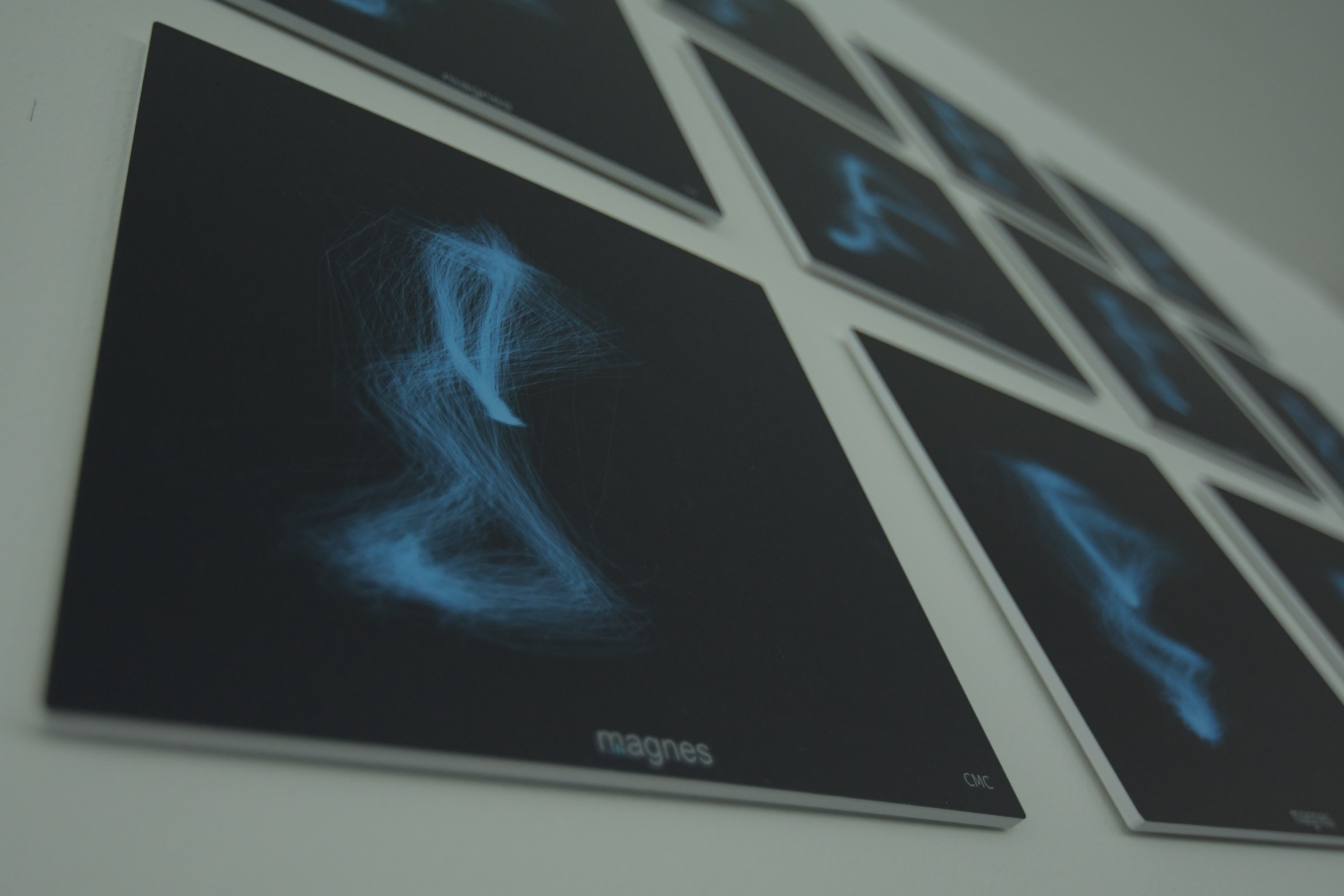
A Smart Shoe System for Gait Analysis and Remote Monitoring in Parkinson's Disease - A Validation Study
Maddumage Dona S, Sullivan K, Lehn A, Kalyani N, Prins D, Kerr G. Sensors 2026;26(14):4446. A validation of NUSHU's spatiotemporal gait parameters against Vicon motion capture, in people…
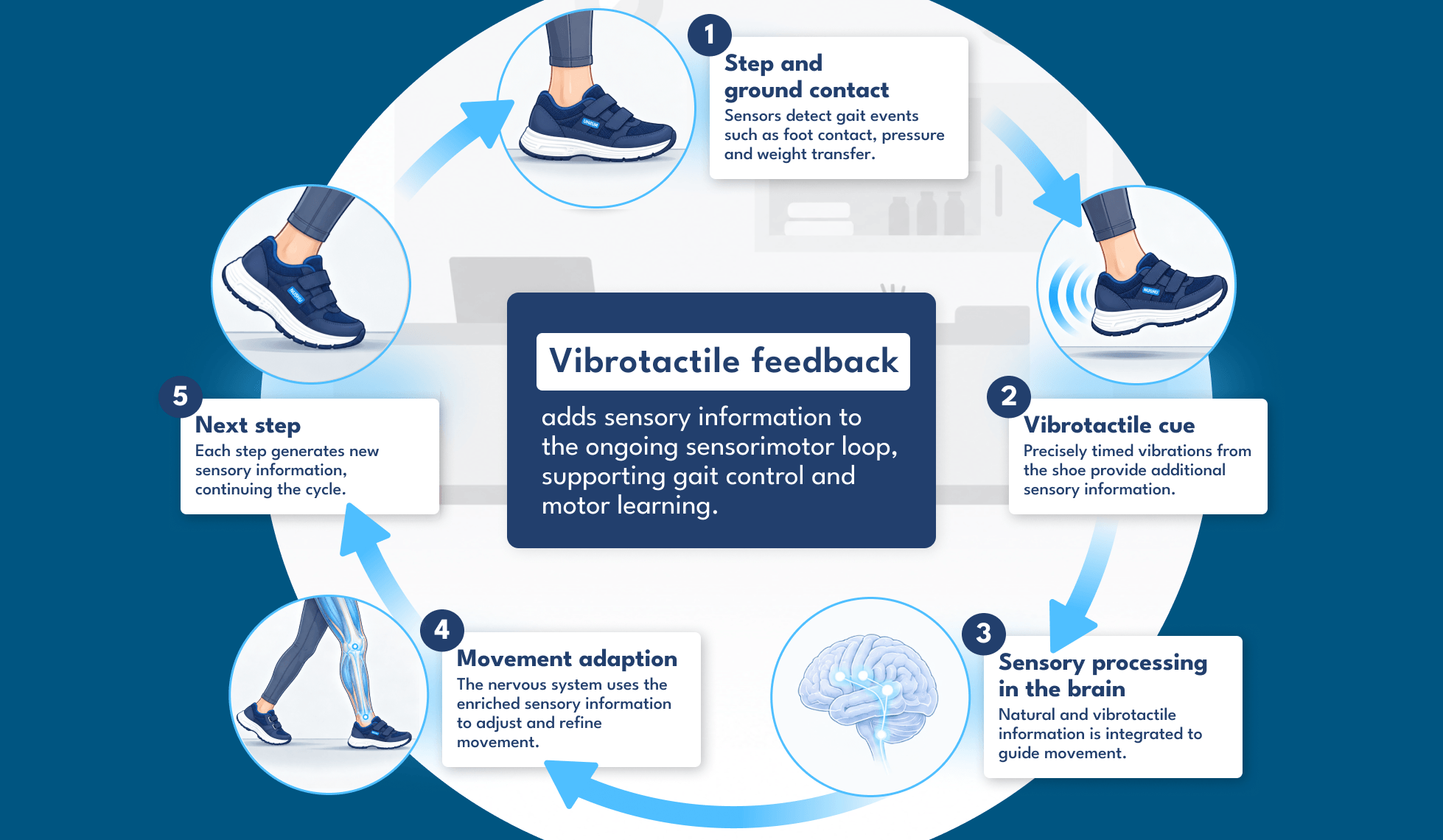
Vibrotactile Feedback for Gait Rehabilitation
How precisely timed tactile cues augment the sensory information available during walking, what the clinical evidence shows, and what that means for wearable gait rehabilitation.
Walking: How the Nervous System Shapes Every Step
What happens between intention and movement, and what objective gait measurement can describe about how a person walks.
From Perception to Movement
The senses behind movement - proprioception, the vestibular system and vision - and how sensory augmentation joins that exchange.
What Gait Can Tell Us About Fall Risk
Understanding gait characteristics associated with an increased risk of falling, and why no single parameter tells the whole story.
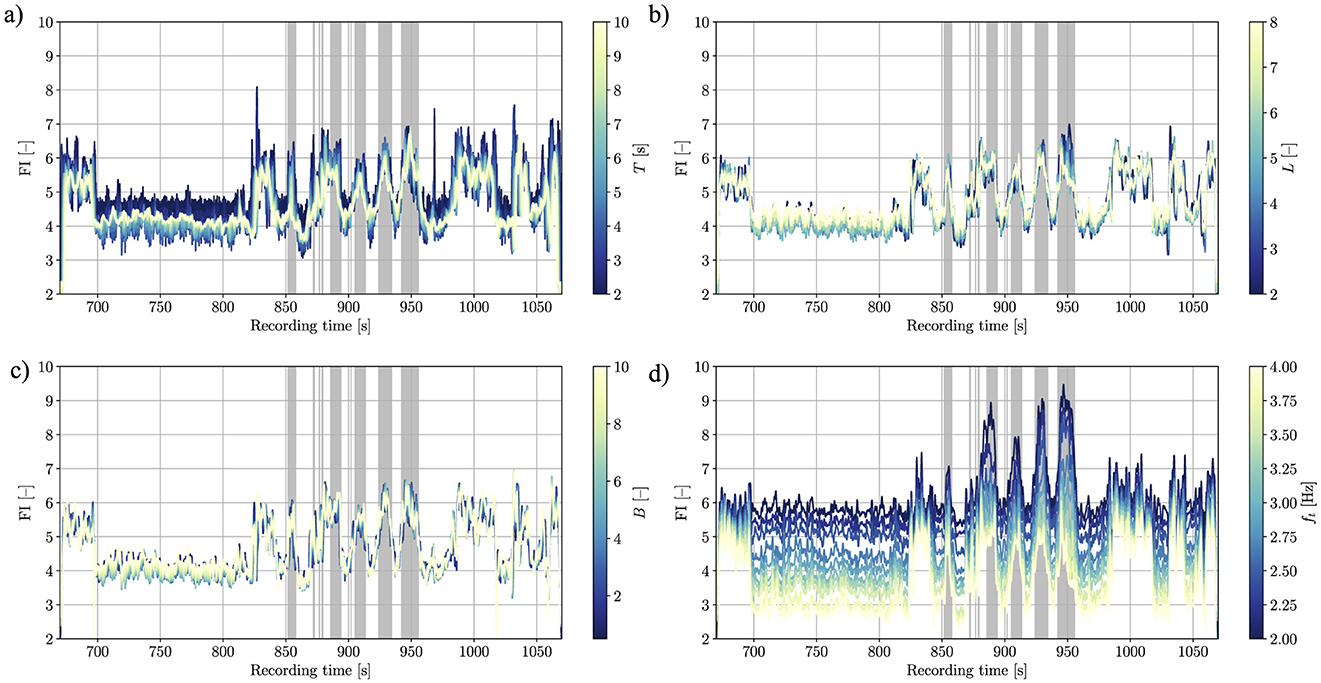
Toward a unified gait freeze index: a standardized benchmark for clinical and regulatory evaluations
Automatic methods for detecting FOG using the freeze index (FI) have been widely proposed to systematically monitor FOG in real life and…
Human gait-labeling uncertainty and a hybrid model for gait segmentation
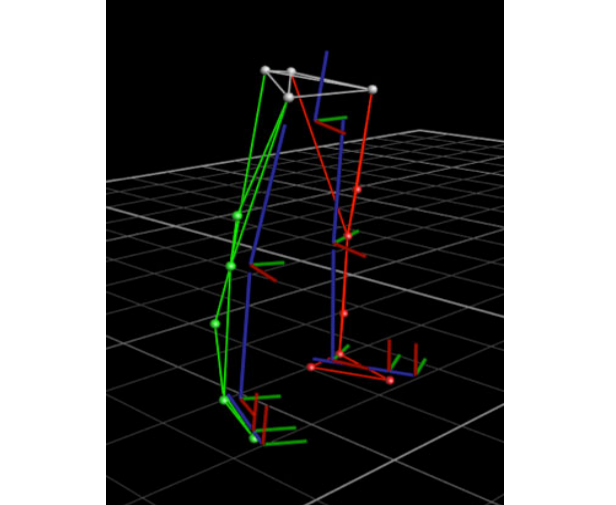
Motion capture systems are widely accepted as ground-truth for gait analysis and are used for the validation of other gait analysis systems.…
An Intelligent In‐Shoe System for Gait Monitoring and
Analysis with Optimized Sampling and Real‐Time
Visualization Capabilities
The deterioration of gait can be used as a biomarker for ageing and neurological diseases. Continuous gait monitoring and analysis are essential…